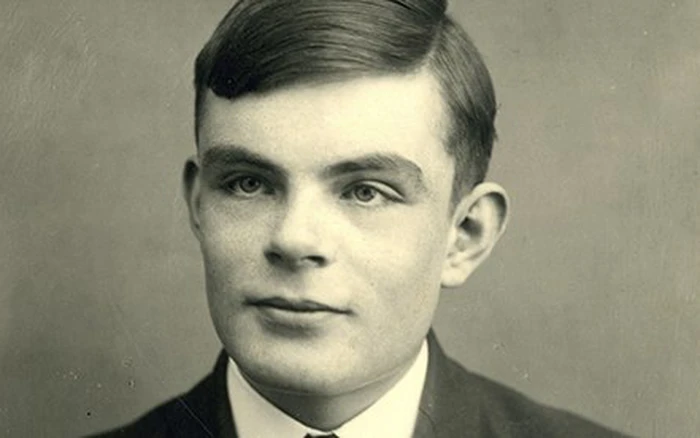
Alan Turing
A brilliant British mathematician and logician who laid the theoretical foundations for computer science and artificial intelligence.
born1912
died1954
nationalityBritish
known forcracking the Enigma code and inventing the Turing machine
fieldmathematics and computer science
- He invented the concept of the Turing machine, the basis of modern computers
- He played a crucial role in cracking the German Enigma code during WWII
- He proposed the Turing Test to measure artificial intelligence
- He is widely considered the father of theoretical computer science
Timeline
1912Born in London, England
1936Published his paper introducing the 'Turing machine'
1939Joined the codebreaking team at Bletchley Park
1941Helped crack the German Enigma code, shortening WWII
1950Proposed the Turing Test for artificial intelligence
1954Died in Cheshire, England
background
Alan Turing was born in 1912 in London, England. From a young age, he showed an extraordinary aptitude for math and science, often solving complex problems without learning the standard methods. He studied mathematics at King's College, Cambridge, where he became fascinated by logic and the limits of what could be calculated. Although he was sometimes seen as eccentric, his unique way of thinking allowed him to see solutions that others completely missed.
Alan Turing sinh năm 1912 tại London, Anh. Từ khi còn nhỏ, ông đã bộc lộ năng khiếu phi thường về toán học và khoa học, thường giải quyết các vấn đề phức tạp mà không cần học các phương pháp tiêu chuẩn. Ông theo học toán tại trường King's College, Cambridge, nơi ông trở nên say mê logic và những giới hạn của những gì có thể tính toán được. Mặc dù đôi khi bị coi là lập dị, cách tư duy độc đáo của ông đã giúp ông nhìn thấy những giải pháp mà người khác hoàn toàn bỏ lỡ.
achievement
In 1936, Turing introduced the concept of a "universal machine," now known as the Turing machine. This theoretical device could process symbols on a tape based on a set of rules, essentially describing how all modern computers work before they even existed. During World War II, Turing put his genius to practical use by leading a team of codebreakers at Bletchley Park. Together, they built the Bombe machine to crack the complex German Enigma code, an achievement that saved millions of lives and significantly shortened the war.
Năm 1936, Turing giới thiệu khái niệm về một "cỗ máy vạn năng", ngày nay được gọi là cỗ máy Turing. Thiết bị lý thuyết này có thể xử lý các ký hiệu trên một dải băng dựa trên một tập hợp các quy tắc, về cơ bản đã mô tả cách tất cả các máy tính hiện đại hoạt động ngay cả trước khi chúng tồn tại. Trong Thế chiến thứ hai, Turing đã đưa thiên tài của mình vào sử dụng thực tế bằng cách lãnh đạo một nhóm phá mã tại Bletchley Park. Cùng nhau, họ đã chế tạo cỗ máy Bombe để giải mã mã Enigma phức tạp của Đức, một thành tựu đã cứu sống hàng triệu người và rút ngắn đáng kể cuộc chiến.
impact
After the war, Turing continued his pioneering work by exploring the possibility of artificial intelligence. In 1950, he proposed the "Turing Test" to determine whether a machine could think and converse like a human. Tragically, despite his heroism, he was prosecuted for his homosexuality in 1952, which was illegal in the UK at the time, and died two years later. Today, Alan Turing is celebrated as the father of theoretical computer science, and his legacy lives on in every smartphone, laptop, and AI system we use.
Sau chiến tranh, Turing tiếp tục công việc tiên phong của mình bằng cách khám phá khả năng của trí tuệ nhân tạo. Năm 1950, ông đề xuất "Phép thử Turing" để xác định xem một cỗ máy có thể suy nghĩ và trò chuyện giống con người hay không. Thật bi thảm, bất chấp chủ nghĩa anh hùng của mình, ông đã bị truy tố vì tội đồng tính luyến ái vào năm 1952, điều vốn bất hợp pháp ở Vương quốc Anh vào thời điểm đó, và qua đời hai năm sau đó. Ngày nay, Alan Turing được tôn vinh là cha đẻ của khoa học máy tính lý thuyết, và di sản của ông vẫn sống mãi trong mọi điện thoại thông minh, máy tính xách tay và hệ thống AI mà chúng ta sử dụng.
Vocabulary
aptitudenăng khiếu
a natural ability or skill
một khả năng hoặc kỹ năng bẩm sinh
eccentriclập dị
considered by other people to be strange or unusual
bị người khác coi là kỳ lạ hoặc bất thường
theoreticalthuộc về lý thuyết
concerned with the ideas and principles of a subject rather than practical uses
liên quan đến các ý tưởng và nguyên tắc của một chủ đề thay vì các ứng dụng thực tế
codebreakerngười giải mã / phá mã
a person who works out the meaning of secret messages
một người tìm ra ý nghĩa của các tin nhắn bí mật
artificial intelligencetrí tuệ nhân tạo
the ability of a computer program or a machine to think and learn
khả năng suy nghĩ và học hỏi của một chương trình máy tính hoặc máy móc
prosecutetruy tố
to officially charge somebody with a crime in court
chính thức buộc tội ai đó về một tội ác trước tòa án
Knowledge Check
FACTUAL1 / 4
What machine did Turing and his team build to break the Enigma code?
Flashcards
KNOWLEDGE
Who was Alan Turing?
A British mathematician considered the father of theoretical computer science.
1 / 9