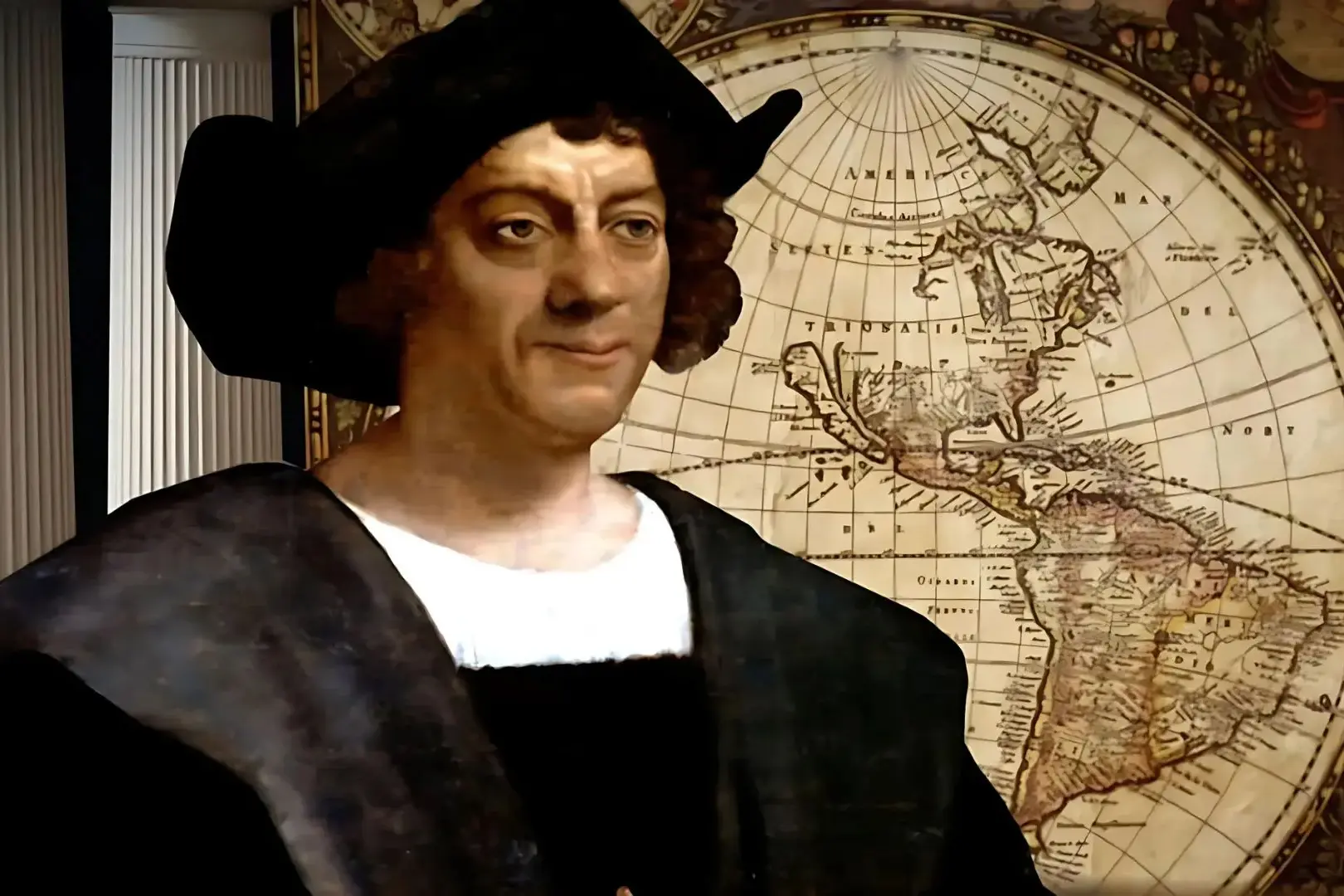
Christopher Columbus
An Italian explorer and navigator who completed four voyages across the Atlantic Ocean, opening the Americas to European exploration and colonization.
born1451
died1506
nationalityItalian
known forthe 1492 voyage that initiated European colonization of the Americas
fieldexploration and navigation
- He secured funding from the Spanish monarchs for his 1492 expedition
- He completed four transatlantic voyages, connecting Europe to the Americas
- He initiated the Columbian Exchange, a massive transfer of plants, animals, and cultures
- His expeditions paved the way for the extensive European exploration and colonization of the New World
Timeline
1451Born in Genoa, Italy
1492Completed his first voyage and reached the Bahamas
1493Established the first European settlement in Hispaniola
1498Reached the mainland of South America on his third voyage
1502Undertook his fourth and final voyage to the New World
1506Died in Valladolid, Spain
background
Christopher Columbus was born in 1451 in the Republic of Genoa, part of modern-day Italy. From a young age, he went to sea and learned how to navigate by studying ocean currents and the stars. He read widely about geography and became convinced that he could reach Asia—known for its valuable spices and gold—by sailing west across the Atlantic Ocean, instead of traveling east over land. For years, he struggled to find a king or queen who would fund his ambitious and risky plan.
Christopher Columbus sinh năm 1451 tại Cộng hòa Genoa, một phần của nước Ý ngày nay. Từ khi còn trẻ, ông đã đi biển và học cách điều hướng bằng cách nghiên cứu các dòng hải lưu và các vì sao. Ông đọc nhiều về địa lý và tin chắc rằng mình có thể đến châu Á—nơi nổi tiếng với gia vị và vàng bạc quý giá—bằng cách chèo thuyền về phía tây qua Đại Tây Dương, thay vì đi về phía đông trên đất liền. Trong nhiều năm, ông đã chật vật để tìm một vị vua hoặc nữ hoàng chịu tài trợ cho kế hoạch đầy tham vọng và rủi ro của mình.
achievement
Finally, in 1492, King Ferdinand and Queen Isabella of Spain agreed to sponsor his expedition. He set sail with three small ships: the Niña, the Pinta, and the Santa María. After several weeks of sailing with no land in sight, his frightened crew almost rebelled. However, on October 12, 1492, they finally spotted land. Columbus had reached the Bahamas, though he incorrectly believed he had arrived in the East Indies. This historic voyage marked the beginning of sustained contact between Europe and the Americas.
Cuối cùng, vào năm 1492, Vua Ferdinand và Nữ hoàng Isabella của Tây Ban Nha đã đồng ý tài trợ cho chuyến thám hiểm của ông. Ông ra khơi với ba con tàu nhỏ: Niña, Pinta và Santa María. Sau nhiều tuần lênh đênh trên biển mà không thấy đất liền, thủy thủ đoàn sợ hãi của ông gần như đã nổi loạn. Tuy nhiên, vào ngày 12 tháng 10 năm 1492, cuối cùng họ cũng nhìn thấy đất liền. Columbus đã đến Bahamas, mặc dù ông tin nhầm rằng mình đã đến Đông Ấn. Chuyến đi lịch sử này đánh dấu sự khởi đầu của sự liên hệ liên tục giữa châu Âu và châu Mỹ.
impact
Columbus made three more voyages, exploring the Caribbean islands and the coasts of Central and South America. While he is famous for "discovering" the New World for Europe, his legacy is heavily debated today. His arrival brought terrible diseases that devastated the indigenous populations, and his pursuit of wealth led to the forced labor and harsh treatment of native peoples. Despite these tragic consequences, his expeditions fundamentally changed world history, leading to the global exchange of cultures, plants, animals, and ideas known as the Columbian Exchange.
Columbus đã thực hiện thêm ba chuyến đi nữa, khám phá các hòn đảo Caribe và bờ biển Trung và Nam Mỹ. Mặc dù ông nổi tiếng vì đã "khám phá" ra Tân Thế giới cho châu Âu, di sản của ông ngày nay gây ra nhiều tranh cãi. Sự xuất hiện của ông đã mang theo những căn bệnh khủng khiếp tàn phá các quần thể dân cư bản địa, và việc theo đuổi sự giàu có của ông đã dẫn đến lao động cưỡng bức và sự đối xử tàn nhẫn với người dân bản xứ. Bất chấp những hậu quả bi thảm này, các chuyến thám hiểm của ông đã thay đổi căn bản lịch sử thế giới, dẫn đến sự trao đổi toàn cầu về văn hóa, thực vật, động vật và ý tưởng được gọi là Trao đổi theo kiểu Columbus (Columbian Exchange).
Vocabulary
navigateđiều hướng
to find the right direction to travel
tìm ra hướng đi đúng để di chuyển
expeditionchuyến thám hiểm
a journey undertaken by a group of people with a particular purpose
một hành trình do một nhóm người thực hiện với một mục đích cụ thể
rebelnổi loạn
to refuse to obey rules or people in authority
từ chối tuân theo các quy tắc hoặc những người có thẩm quyền
indigenousbản địa
originating or occurring naturally in a particular place
có nguồn gốc hoặc xảy ra tự nhiên ở một nơi cụ thể
devastatetàn phá
to destroy or ruin something completely
phá hủy hoặc làm hỏng hoàn toàn một cái gì đó
legacydi sản
something that is a part of your history or that remains from an earlier time
thứ gì đó là một phần lịch sử của bạn hoặc còn sót lại từ thời gian trước đó
Knowledge Check
FACTUAL1 / 4
Who sponsored Christopher Columbus's 1492 expedition?
Flashcards
KNOWLEDGE
Who was Christopher Columbus?
An Italian explorer who opened the Americas to European colonization.
1 / 9