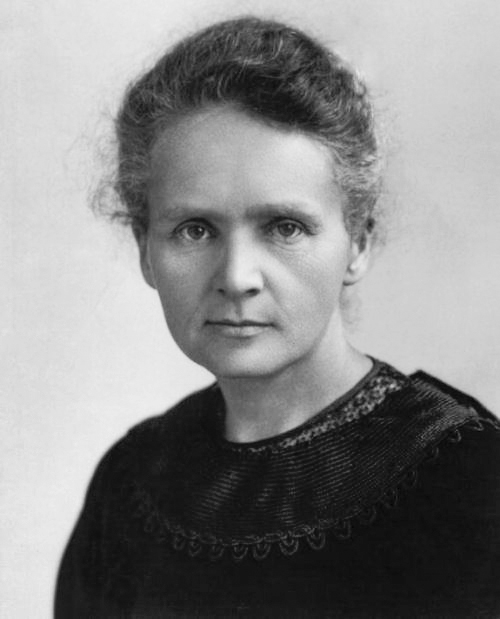
Marie Curie
A pioneering physicist and chemist who conducted groundbreaking research on radioactivity and discovered two new elements.
born1867
died1934
nationalityPolish-French
known forresearch on radioactivity and discovery of polonium and radium
fieldphysics and chemistry
- She coined the term radioactivity and discovered two new elements
- She was the first woman to win a Nobel Prize
- She is the only person to win Nobel Prizes in two different scientific fields
- She developed mobile X-ray units used during World War I
Timeline
1867Born in Warsaw, Poland
1891Moved to Paris to study at the Sorbonne
1898Discovered the elements polonium and radium
1903Became the first woman to win a Nobel Prize (in Physics)
1911Won her second Nobel Prize (in Chemistry)
1934Died from illness caused by radiation exposure
background
Marie Curie was born in 1867 in Warsaw, Poland. Growing up in a family of teachers, she developed a deep love for learning. However, because women were not allowed to attend regular universities in her home country, she had to study in secret. Eventually, she saved enough money to move to Paris in 1891 to attend the Sorbonne. Despite living in poverty and often going hungry, her incredible determination helped her graduate at the top of her class in physics and mathematics.
Marie Curie sinh năm 1867 tại Warsaw, Ba Lan. Lớn lên trong một gia đình có truyền thống giáo viên, bà đã phát triển một tình yêu sâu sắc với việc học. Tuy nhiên, vì phụ nữ không được phép theo học tại các trường đại học chính quy ở quê nhà, bà đã phải học trong bí mật. Cuối cùng, bà đã tiết kiệm đủ tiền để chuyển đến Paris vào năm 1891 để theo học tại trường Sorbonne. Mặc dù sống trong cảnh nghèo khó và thường xuyên bị đói, sự quyết tâm đáng kinh ngạc đã giúp bà tốt nghiệp thủ khoa ngành vật lý và toán học.
achievement
In Paris, she met and married Pierre Curie, a brilliant scientist who shared her passion. Together, they began investigating the mysterious energy emitted by uranium. Marie coined the term "radioactivity" to describe this phenomenon. Through years of exhausting physical labor, purifying tons of pitchblende in a drafty shed, they discovered two entirely new, highly radioactive elements in 1898: polonium (named after her homeland) and radium. This monumental discovery changed the fundamental understanding of matter and atomic energy.
Tại Paris, bà gặp và kết hôn với Pierre Curie, một nhà khoa học lỗi lạc có cùng đam mê với bà. Cùng nhau, họ bắt đầu điều tra năng lượng bí ẩn được phát ra từ uranium. Marie đã đặt ra thuật ngữ "phóng xạ" để mô tả hiện tượng này. Trải qua nhiều năm lao động thể chất mệt nhọc, tinh chế hàng tấn quặng uranit trong một nhà kho lộng gió, họ đã khám phá ra hai nguyên tố hoàn toàn mới và có tính phóng xạ cao vào năm 1898: polonium (được đặt theo tên quê hương bà) và radium. Khám phá vĩ đại này đã làm thay đổi sự hiểu biết cơ bản về vật chất và năng lượng nguyên tử.
impact
Marie Curie's groundbreaking research earned her immense recognition, making her the first woman to win a Nobel Prize and the only person to win in two different scientific fields (physics and chemistry). During World War I, she also developed mobile X-ray units to treat wounded soldiers on the battlefield. Tragically, her constant exposure to radiation, the very thing she discovered, eventually caused her death in 1934. Today, she is remembered as a fearless pioneer whose relentless dedication paved the way for modern physics and medical treatments.
Nghiên cứu mang tính đột phá của Marie Curie đã mang lại cho bà sự công nhận to lớn, đưa bà trở thành người phụ nữ đầu tiên giành giải Nobel và là người duy nhất giành giải trong hai lĩnh vực khoa học khác nhau (vật lý và hóa học). Trong Thế chiến thứ nhất, bà cũng đã phát triển các thiết bị tia X di động để điều trị cho những người lính bị thương trên chiến trường. Thật bi thảm, việc tiếp xúc liên tục với bức xạ, chính thứ mà bà đã khám phá ra, cuối cùng đã gây ra cái chết của bà vào năm 1934. Ngày nay, bà được nhớ đến như một người tiên phong quả cảm, người có sự cống hiến không ngừng nghỉ đã mở đường cho vật lý hiện đại và các phương pháp điều trị y tế.
Vocabulary
determinationsự quyết tâm
the quality of trying to do something even when it is difficult
phẩm chất cố gắng làm một điều gì đó ngay cả khi nó khó khăn
emitphát ra / tỏa ra
to send out light, sound, or a smell, or a gas
gửi ra ánh sáng, âm thanh, hoặc mùi, hoặc một chất khí
radioactivityhiện tượng phóng xạ
the sending out of radiation when the nucleus of an atom breaks apart
sự phát ra bức xạ khi hạt nhân của một nguyên tử vỡ ra
phenomenonhiện tượng
a fact or an event in nature or society, especially one that is not fully understood
một sự thật hoặc một sự kiện trong tự nhiên hoặc xã hội, đặc biệt là sự việc chưa được hiểu đầy đủ
monumentalvĩ đại / mang tính bước ngoặt
very important and having a great influence
rất quan trọng và có ảnh hưởng lớn
pioneerngười tiên phong
a person who is one of the first to do something
một người là một trong những người đầu tiên làm một điều gì đó
Knowledge Check
FACTUAL1 / 4
Which two elements did Marie Curie discover?
Flashcards
KNOWLEDGE
Who was Marie Curie?
A pioneering physicist and chemist who researched radioactivity.
1 / 9