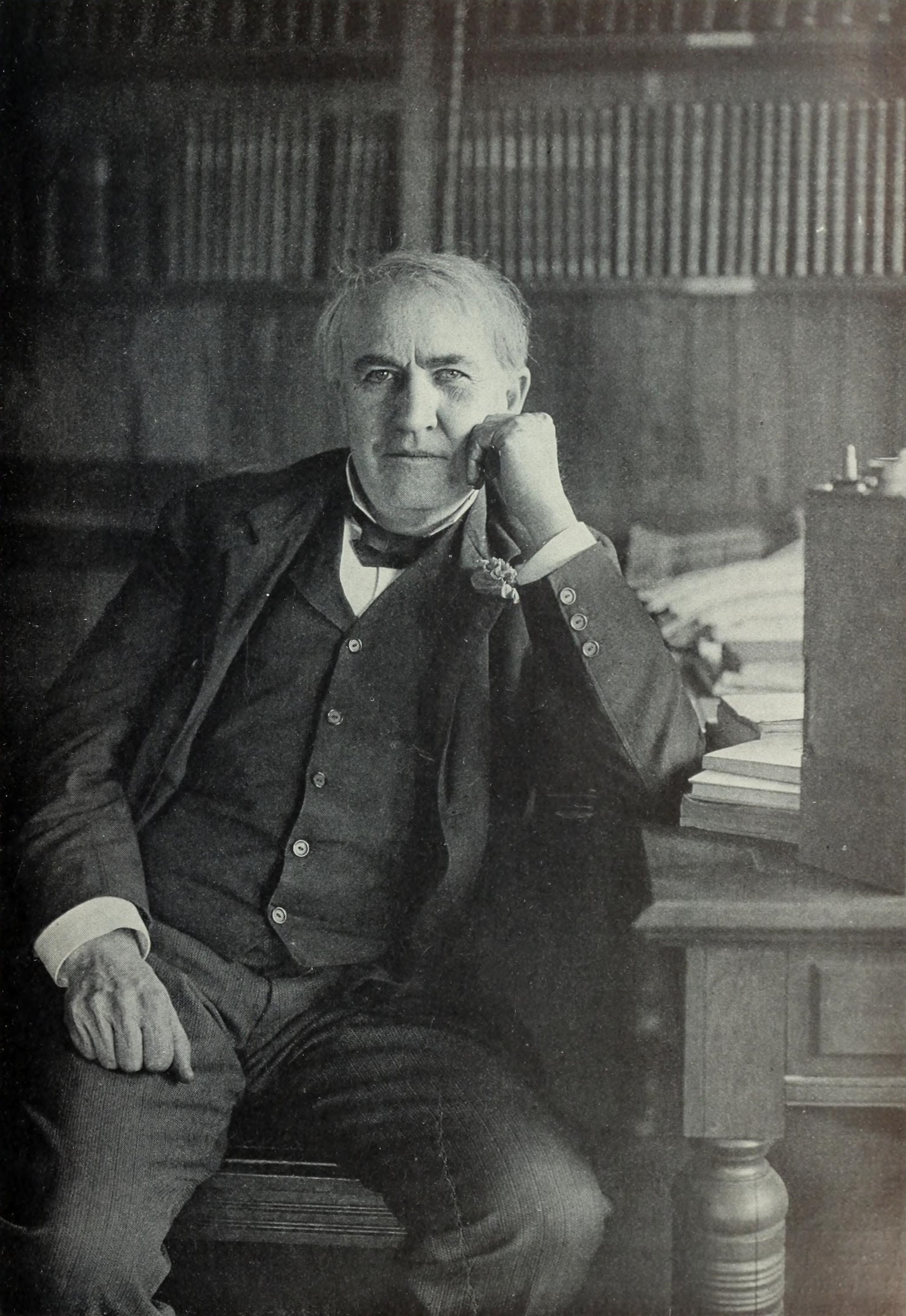
Thomas Edison
An American inventor and businessman who developed many devices that greatly influenced life around the world.
born1847
died1931
nationalityAmerican
known forthe practical incandescent light bulb and the phonograph
fieldinventing and electrical engineering
- He developed the first practical incandescent light bulb
- He invented the phonograph to record and play sound
- He created the first industrial research laboratory
- He held over 1,000 patents during his lifetime
Timeline
1847Born in Ohio, USA
1869Obtained his first patent for the electric vote recorder
1877Invented the phonograph
1879Developed a practical and long-lasting electric light bulb
1882Opened the first commercial electrical distribution plant
1931Died in New Jersey, USA
background
Thomas Edison was born in 1847 in the United States. As a child, he only attended school for a few months because his teachers thought he was too slow to learn. His mother decided to teach him at home instead. He loved reading and conducting chemistry experiments in his basement. Although he lost much of his hearing at a young age, he never let this disability stop him. Instead, it helped him concentrate on his work without being distracted by noise.
Thomas Edison sinh năm 1847 tại Hoa Kỳ. Khi còn nhỏ, ông chỉ đến trường trong vài tháng vì các giáo viên nghĩ rằng ông quá chậm hiểu. Thay vào đó, mẹ ông quyết định dạy ông ở nhà. Ông rất thích đọc sách và thực hiện các thí nghiệm hóa học trong tầng hầm của mình. Mặc dù bị mất phần lớn thính lực khi còn trẻ, ông không bao giờ để khuyết tật này ngăn cản mình. Ngược lại, nó giúp ông tập trung vào công việc mà không bị phân tâm bởi tiếng ồn.
achievement
Edison is most famous for developing the practical incandescent light bulb in 1879. Before him, electric lights existed but were too expensive or burned out too quickly for everyday use. He tested thousands of materials before finding the right filament that could glow for a long time. In addition to the light bulb, he invented the phonograph, which was the first machine to record and play back sound, and the motion picture camera. He eventually held over a thousand patents in his lifetime.
Edison nổi tiếng nhất với việc phát triển bóng đèn sợi đốt thực tế vào năm 1879. Trước ông, đèn điện đã tồn tại nhưng quá đắt đỏ hoặc cháy quá nhanh để sử dụng hằng ngày. Ông đã thử nghiệm hàng ngàn vật liệu trước khi tìm ra sợi dây tóc phù hợp có thể phát sáng trong thời gian dài. Ngoài bóng đèn, ông còn phát minh ra máy hát, cỗ máy đầu tiên có thể ghi âm và phát lại âm thanh, cùng với máy quay phim. Cuối cùng, ông đã nắm giữ hơn một ngàn bằng sáng chế trong suốt cuộc đời mình.
impact
More than just an inventor, Edison was a brilliant businessman who revolutionized how inventions were made. He built the first industrial research laboratory in Menlo Park, New Jersey, where teams of scientists and engineers worked together to solve problems. This teamwork approach became the model for modern research and development. Edison's work in electricity and mass communication transformed society, leading the world into the modern industrial age. His relentless work ethic is summarized in his famous quote: "Genius is one percent inspiration and ninety-nine percent perspiration."
Không chỉ là một nhà phát minh, Edison còn là một doanh nhân xuất sắc, người đã cách mạng hóa cách thức tạo ra các phát minh. Ông đã xây dựng phòng thí nghiệm nghiên cứu công nghiệp đầu tiên ở Menlo Park, New Jersey, nơi các nhóm nhà khoa học và kỹ sư làm việc cùng nhau để giải quyết vấn đề. Cách tiếp cận làm việc nhóm này đã trở thành mô hình cho hoạt động nghiên cứu và phát triển hiện đại. Công trình của Edison trong lĩnh vực điện và truyền thông đại chúng đã biến đổi xã hội, đưa thế giới bước vào kỷ nguyên công nghiệp hiện đại. Đạo đức làm việc không ngừng nghỉ của ông được tóm tắt trong câu nói nổi tiếng: "Thiên tài là một phần trăm cảm hứng và chín mươi chín phần trăm mồ hôi."
Vocabulary
incandescentsợi đốt / nóng sáng
emitting light as a result of being heated
phát ra ánh sáng do bị đốt nóng
phonographmáy hát
an early machine used for recording and playing back sound
một cỗ máy thời kỳ đầu được sử dụng để ghi âm và phát lại âm thanh
patentbằng sáng chế
the official right to be the only person to make or sell a product
quyền chính thức là người duy nhất được tạo ra hoặc bán một sản phẩm
filamentdây tóc (bóng đèn)
a thin wire in a light bulb that produces light when heated
một sợi dây mỏng trong bóng đèn tạo ra ánh sáng khi được làm nóng
distractedbị phân tâm
unable to pay attention to something
không thể chú ý đến điều gì đó
perspirationmồ hôi / sự đổ mồ hôi (ý chỉ sự nỗ lực)
sweat, or the act of working hard
mồ hôi, hoặc hành động làm việc chăm chỉ
Knowledge Check
FACTUAL1 / 4
What machine did Edison invent to record and play back sound?
Flashcards
KNOWLEDGE
Who was Thomas Edison?
An American inventor who developed the practical incandescent light bulb.
1 / 9