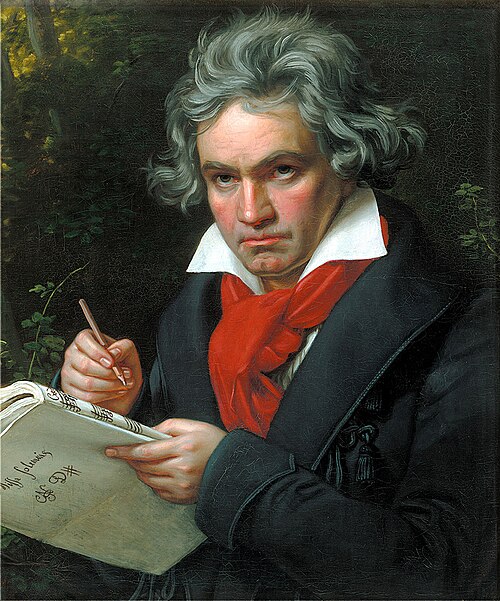
Beethoven
A brilliant German composer and pianist whose work marked the profound transition between the Classical and Romantic eras in Western music.
Một nhà soạn nhạc và nghệ sĩ piano người Đức xuất chúng, tác phẩm của ông đánh dấu sự chuyển tiếp sâu sắc giữa thời kỳ Cổ điển và Lãng mạn trong âm nhạc phương Tây.
This biography of Beethoven helps you learn English through real historical stories. Explore Beethoven's impact on the world.
born1770
died1827
nationalityGerman
known forSymphony No. 9, Symphony No. 5, and transitioning music to the Romantic era
fieldmusic and composition
Key Takeaways from this Biography
- He was a crucial transitional figure between the Classical and Romantic eras of Western musicÔng là một nhân vật chuyển tiếp quan trọng giữa thời kỳ Cổ điển và Lãng mạn của âm nhạc phương Tây
- Despite slowly going completely deaf, he continued to compose his greatest masterpiecesBất chấp việc dần bị điếc hoàn toàn, ông vẫn tiếp tục sáng tác những kiệt tác vĩ đại nhất của mình
- His 'Heroic' period produced fiercely emotional and original works like Symphony No. 3 and Symphony No. 5Thời kỳ 'Anh hùng' của ông đã tạo ra những tác phẩm nguyên bản và dạt dào cảm xúc mãnh liệt như Bản giao hưởng số 3 và số 5
- His monumental Symphony No. 9 was the first to use a choir, featuring the famous 'Ode to Joy'Bản giao hưởng số 9 vĩ đại của ông là bản đầu tiên sử dụng dàn hợp xướng, với 'Khúc hoan ca' nổi tiếng
Life Timeline
1770
Born in Bonn, GermanySinh ra ở Bonn, Đức
1792
Moved to Vienna to study with Joseph HaydnChuyển đến Vienna để theo học Joseph Haydn
1802
Wrote the Heiligenstadt Testament, revealing his despair over his deafnessViết Di chúc Heiligenstadt, bày tỏ sự tuyệt vọng về căn bệnh điếc của mình
1804
Premiered his Symphony No. 3 ('Eroica')Công diễn lần đầu Bản giao hưởng số 3 ('Eroica')
1824
Premiered Symphony No. 9, featuring the 'Ode to Joy'Công diễn lần đầu Bản giao hưởng số 9, nổi bật với khúc 'Khải hoàn ca' (Ode to Joy)
1827
Died in Vienna, AustriaQua đời ở Vienna, Áo
Biography Reading: Beethoven
background
Ludwig van Beethoven was born in 1770 in Bonn, Germany. Recognizing his prodigious musical talent early on, his father subjected him to a grueling and often abusive training regimen, hoping to mold him into the next Mozart. In 1792, Beethoven moved to Vienna, the musical capital of Europe, where he studied under the great Joseph Haydn. He quickly earned a reputation not only as a brilliant composer but also as a virtuoso pianist known for his powerful, emotionally charged improvisations that broke away from the strict, polite elegance of the Classical period.
Ludwig van Beethoven sinh năm 1770 tại Bonn, Đức. Sớm nhận ra tài năng âm nhạc thiên bẩm của ông, cha ông đã bắt ông phải trải qua một chế độ đào tạo khắc nghiệt và thường xuyên mang tính bạo hành, với hy vọng nhào nặn ông thành một Mozart tiếp theo. Năm 1792, Beethoven chuyển đến Vienna, thủ đô âm nhạc của châu Âu, nơi ông theo học dưới sự hướng dẫn của nhà soạn nhạc vĩ đại Joseph Haydn. Ông nhanh chóng nổi danh không chỉ như một nhà soạn nhạc lỗi lạc mà còn là một nghệ sĩ dương cầm bậc thầy, được biết đến với những bản ngẫu hứng mạnh mẽ, dạt dào cảm xúc, phá vỡ sự thanh lịch, khuôn phép của thời kỳ Cổ điển.
achievement
Tragedy struck precisely as his career was ascending. Around his late twenties, Beethoven began losing his hearing. In his heartbreaking "Heiligenstadt Testament" of 1802, he confessed his deep despair and suicidal thoughts caused by his creeping deafness. Yet, he resolved to continue living for the sake of his art. This profound personal struggle ushered in his "Heroic" period, characterized by massive, fiercely original works like his Symphony No. 3 ("Eroica") and Symphony No. 5. His music became deeply personal, expressing themes of struggle, triumph, and the indomitable human spirit, effectively launching the Romantic era of music.
Bi kịch giáng xuống đúng lúc sự nghiệp của ông đang thăng hoa. Khoảng cuối những năm hai mươi tuổi, Beethoven bắt đầu mất dần thính giác. Trong "Di chúc Heiligenstadt" đau lòng của mình năm 1802, ông đã thú nhận sự tuyệt vọng tột cùng và ý định tự tử do chứng điếc ngày càng tồi tệ gây ra. Tuy nhiên, ông đã quyết tâm tiếp tục sống vì nghệ thuật của mình. Cuộc đấu tranh nội tâm sâu sắc này đã mở ra thời kỳ "Anh hùng" của ông, đặc trưng bởi những tác phẩm đồ sộ, mang tính nguyên bản mãnh liệt như Bản giao hưởng số 3 ("Eroica") và Bản giao hưởng số 5. Âm nhạc của ông trở nên mang đậm tính cá nhân, thể hiện các chủ đề về sự đấu tranh, chiến thắng và tinh thần bất khuất của con người, qua đó chính thức mở ra kỷ nguyên Lãng mạn của âm nhạc.
impact
By his final decade, Beethoven was almost completely deaf, yet he composed some of his most complex, transcendent masterpieces during this time. His crowning achievement was the monumental Symphony No. 9, the first symphony ever to include a choir, culminating in the triumphant "Ode to Joy." When he conducted its premiere in 1824, he had to be turned around to see the thunderous applause he could not hear. Beethoven died in 1827, leaving an unparalleled legacy. He fundamentally redefined the role of the composer, shifting music from mere aristocratic entertainment to a profound expression of individual emotion and philosophical thought.
Vào thập kỷ cuối đời, Beethoven gần như bị điếc hoàn toàn, nhưng ông lại sáng tác ra một số kiệt tác phức tạp và siêu việt nhất của mình trong thời gian này. Thành tựu rực rỡ nhất của ông là Bản giao hưởng số 9 vĩ đại, bản giao hưởng đầu tiên trong lịch sử có sự góp mặt của dàn hợp xướng, lên đến đỉnh điểm trong khúc ca khải hoàn "Ode to Joy" (Khúc hoan ca). Khi ông chỉ huy buổi ra mắt tác phẩm này vào năm 1824, người ta đã phải xoay người ông lại để ông nhìn thấy tràng pháo tay sấm sét mà ông không thể nghe thấy. Beethoven qua đời năm 1827, để lại một di sản vô song. Ông đã định nghĩa lại căn bản vai trò của nhà soạn nhạc, chuyển đổi âm nhạc từ chỗ chỉ là trò giải trí của giới quý tộc thành một sự biểu đạt sâu sắc về cảm xúc cá nhân và tư tưởng triết học.
Essential Vocabulary
regimenchế độ / phác đồ
a prescribed course of medical treatment, way of life, or diet for the promotion or restoration of health; a systematic plan
một quá trình điều trị y tế, lối sống hoặc chế độ ăn uống được kê đơn để thúc đẩy hoặc phục hồi sức khỏe; một kế hoạch có hệ thống
virtuosobậc thầy / nghệ sĩ điêu luyện
a person highly skilled in music or another artistic pursuit
một người có kỹ năng cao trong âm nhạc hoặc một theo đuổi nghệ thuật khác
improvisationsự ngẫu hứng
the act of creating and performing music, drama, or poetry spontaneously or without preparation
hành động sáng tác và biểu diễn âm nhạc, kịch hoặc thơ một cách tự phát hoặc không cần chuẩn bị
despairsự tuyệt vọng
the complete loss or absence of hope
sự mất mát hoàn toàn hoặc không có hy vọng
indomitablebất khuất / không thể khuất phục
impossible to subdue or defeat
không thể khuất phục hoặc đánh bại
transcendentsiêu việt
beyond or above the range of normal or merely physical human experience
vượt ra ngoài hoặc cao hơn phạm vi của kinh nghiệm con người bình thường hoặc đơn thuần về mặt thể chất
Knowledge Check Quiz
FACTUAL1 / 4
Which of Beethoven's symphonies was the first in history to include a choir?
Flashcards
KNOWLEDGE
Who composed Symphony No. 9 and the 'Ode to Joy'?
Ludwig van Beethoven.
1 / 9