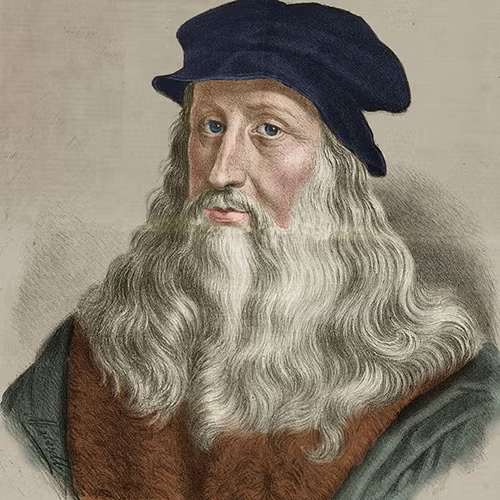
Leonardo da Vinci
An Italian polymath of the High Renaissance who is widely considered one of the greatest painters of all time and a visionary scientist and engineer.
Một học giả bách khoa người Ý thời Phục hưng, được xem là một trong những họa sĩ vĩ đại nhất mọi thời đại và là nhà khoa học, kỹ sư có tầm nhìn.
This biography of Leonardo da Vinci helps you learn English through real historical stories. Explore Leonardo da Vinci's impact on the world.
born1452
died1519
nationalityItalian
known forMona Lisa, The Last Supper, and visionary notebooks
fieldart, science, and engineering
Key Takeaways from this Biography
- He is the ultimate 'Renaissance Man', excelling as both an artist and a scientistÔng là hình mẫu 'Con người thời Phục hưng' tối thượng, xuất sắc ở cả tư cách nghệ sĩ và nhà khoa học
- He painted iconic masterpieces like the 'Mona Lisa' and 'The Last Supper'Ông đã vẽ những kiệt tác mang tính biểu tượng như 'Mona Lisa' và 'Bữa ăn tối cuối cùng'
- He kept detailed notebooks with mirror script, sketching futuristic inventions like flying machinesÔng giữ những cuốn sổ tay chi tiết với chữ viết ngược, phác thảo những phát minh tương lai như cỗ máy bay
- He conducted meticulous human dissections to create highly accurate anatomical drawingsÔng đã thực hiện việc giải phẫu người tỉ mỉ để tạo ra những bản vẽ giải phẫu có độ chính xác cao
Life Timeline
1452
Born in Vinci, ItalySinh ra ở Vinci, Ý
1466
Became an apprentice to the artist Verrocchio in FlorenceTrở thành người học việc cho họa sĩ Verrocchio ở Florence
1495
Began painting 'The Last Supper' in MilanBắt đầu vẽ bức 'Bữa ăn tối cuối cùng' ở Milan
1503
Began painting the 'Mona Lisa'Bắt đầu vẽ bức 'Mona Lisa'
1519
Died in Amboise, FranceQua đời ở Amboise, Pháp
Biography Reading: Leonardo da Vinci
background
Leonardo da Vinci was born in 1452 in the town of Vinci, Italy. As a young man, he received his early training in Florence under the renowned painter and sculptor Andrea del Verrocchio. During the High Renaissance, Leonardo's extraordinary talent quickly became evident. He mastered the technique of "sfumato," a method of blurring lines and blending colors to create soft, lifelike transitions. This mastery is most famously showcased in his iconic masterpieces, "The Last Supper" and the enigmatic "Mona Lisa," which remain among the most celebrated and studied artworks in human history.
Leonardo da Vinci sinh năm 1452 tại thị trấn Vinci, Ý. Khi còn trẻ, ông được đào tạo sớm ở Florence dưới sự hướng dẫn của họa sĩ và nhà điêu khắc nổi tiếng Andrea del Verrocchio. Trong thời kỳ Phục hưng đỉnh cao, tài năng xuất chúng của Leonardo đã nhanh chóng bộc lộ. Ông đã thành thạo kỹ thuật "sfumato", một phương pháp làm mờ các đường nét và pha trộn màu sắc để tạo ra sự chuyển tiếp mềm mại, sống động như thật. Sự thành thạo này được thể hiện nổi tiếng nhất trong các kiệt tác mang tính biểu tượng của ông là "Bữa ăn tối cuối cùng" và bức tranh bí ẩn "Mona Lisa", những tác phẩm vẫn nằm trong số những tác phẩm nghệ thuật được tôn vinh và nghiên cứu nhiều nhất trong lịch sử nhân loại.
achievement
While globally revered for his art, Leonardo's true genius lay in his insatiable curiosity and his belief that art and science were deeply intertwined. He filled thousands of notebook pages with detailed sketches, scientific diagrams, and observations written in a unique mirror script. He conceptualized flying machines, armored vehicles, and concentrated solar power centuries before the technology existed to build them. Furthermore, his anatomical drawings, based on the meticulous dissection of human corpses, provided an unprecedented understanding of the human body and muscular system.
Mặc dù được toàn cầu tôn kính vì nghệ thuật của mình, thiên tài thực sự của Leonardo nằm ở sự tò mò vô độ và niềm tin của ông rằng nghệ thuật và khoa học đan xen sâu sắc với nhau. Ông đã lấp đầy hàng ngàn trang sổ tay bằng những bản phác thảo chi tiết, sơ đồ khoa học và những quan sát được viết bằng chữ viết ngược độc đáo. Ông đã lên ý tưởng cho các cỗ máy bay, xe bọc thép và năng lượng mặt trời tập trung nhiều thế kỷ trước khi công nghệ tồn tại để chế tạo chúng. Hơn nữa, các bản vẽ giải phẫu của ông, dựa trên việc giải phẫu tỉ mỉ xác người, đã cung cấp một sự hiểu biết chưa từng có về cơ thể con người và hệ cơ bắp.
impact
Despite his visionary mind, Leonardo frequently left projects unfinished, constantly distracted by his own endless stream of new ideas and experiments. He spent his final years in France under the patronage of King Francis I, dying in 1519. Today, Leonardo da Vinci remains the ultimate symbol of the "Renaissance Man"—a polymath of unquenchable curiosity and feverishly inventive imagination who saw no dividing line between the humanities and the sciences, leaving a legacy that transcends both time and discipline.
Bất chấp tâm trí nhìn xa trông rộng của mình, Leonardo thường xuyên bỏ dở các dự án, liên tục bị phân tâm bởi dòng chảy ý tưởng và thí nghiệm mới vô tận của chính mình. Ông dành những năm cuối đời ở Pháp dưới sự bảo trợ của Vua Francis I, và qua đời vào năm 1519. Ngày nay, Leonardo da Vinci vẫn là biểu tượng tối thượng của "Con người thời Phục hưng"—một học giả uyên bác với sự tò mò không thể dập tắt và trí tưởng tượng sáng tạo cuồng nhiệt, người không thấy có ranh giới phân chia giữa khoa học nhân văn và khoa học tự nhiên, để lại một di sản vượt qua cả thời gian và mọi lĩnh vực.
Essential Vocabulary
polymathhọc giả uyên bác
a person of wide-ranging knowledge or learning
một người có kiến thức hoặc sự học hỏi sâu rộng
enigmaticbí ẩn
difficult to interpret or understand; mysterious
khó giải thích hoặc hiểu; bí ẩn
insatiablevô độ / không thể thỏa mãn
impossible to satisfy
không thể làm thỏa mãn
intertwinedđan xen
twisted or twined together; closely connected
xoắn hoặc bện vào nhau; kết nối chặt chẽ
meticuloustỉ mỉ
showing great attention to detail; very careful and precise
thể hiện sự chú ý lớn đến từng chi tiết; rất cẩn thận và chính xác
unquenchablekhông thể dập tắt
not able to be quenched or destroyed
không thể dập tắt hoặc phá hủy
Knowledge Check Quiz
FACTUAL1 / 4
Which of the following painting techniques is Leonardo famous for mastering?
Flashcards
KNOWLEDGE
Who painted the 'Mona Lisa' and 'The Last Supper'?
Leonardo da Vinci.
1 / 9