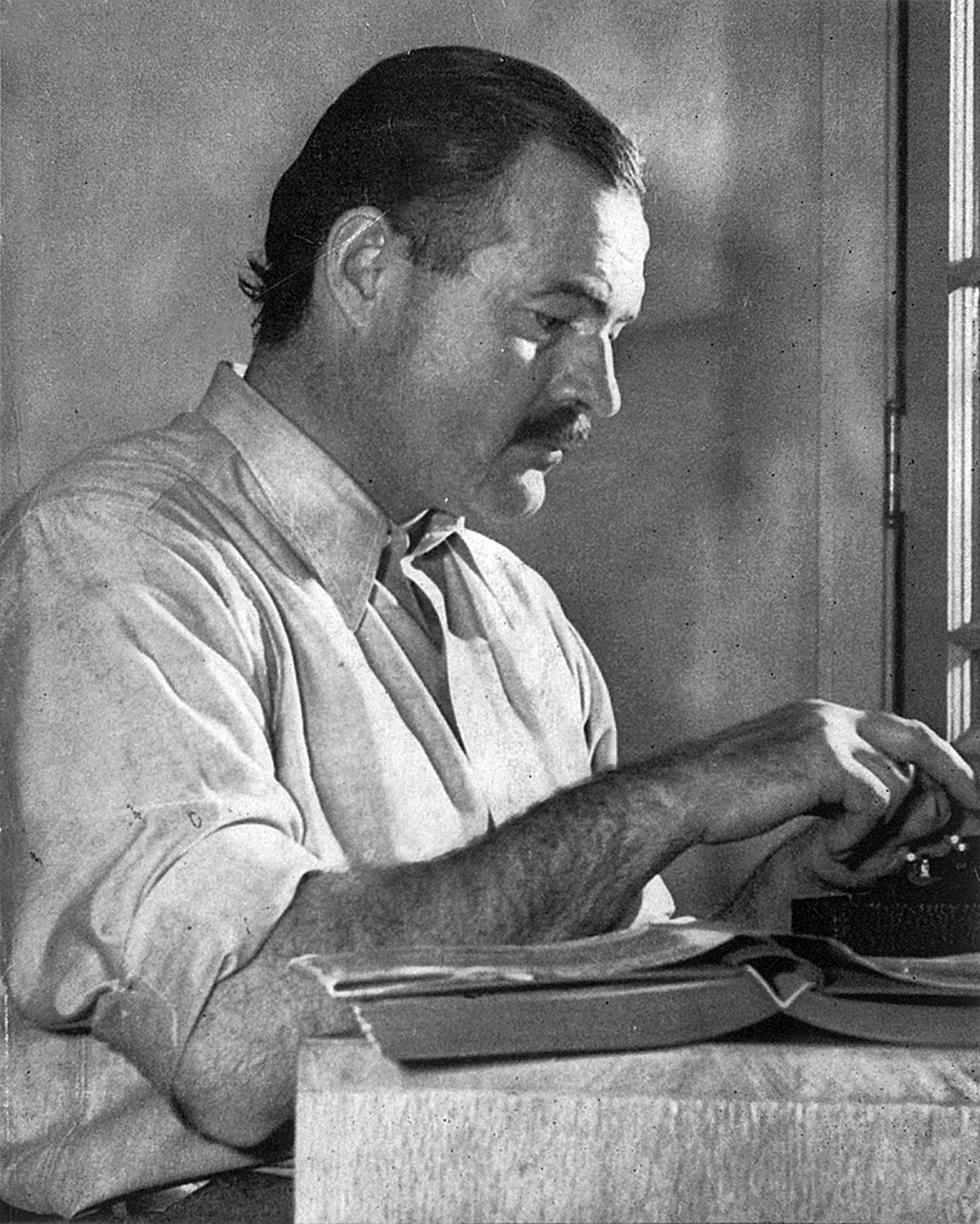
Ernest Hemingway
An iconic American novelist and short-story writer, Nobel Prize laureate, known for his economical, understated style and adventurous lifestyle.
Một tiểu thuyết gia và nhà văn truyện ngắn người Mỹ mang tính biểu tượng, đoạt giải Nobel, nổi tiếng với phong cách ngắn gọn, tinh tế và lối sống phiêu lưu.
This biography of Ernest Hemingway helps you learn English through real historical stories. Explore Ernest Hemingway's impact on the world.
born1899
died1961
nationalityAmerican
known forThe Old Man and the Sea, A Farewell to Arms, and the Iceberg Theory
fieldliterature
Key Takeaways from this Biography
- He was a central figure of the 'Lost Generation' of expatriate writers in ParisÔng là nhân vật trung tâm của 'Thế hệ vứt đi', gồm các nhà văn xa xứ ở Paris
- He developed the 'Iceberg Theory', a writing style characterized by economical and understated proseÔng đã phát triển 'Nguyên lý Tảng băng trôi', một phong cách viết mang đặc trưng của văn xuôi tiết kiệm và tinh tế
- He won the Nobel Prize in Literature in 1954, partly for his masterpiece 'The Old Man and the Sea'Ông đoạt giải Nobel Văn học năm 1954, một phần nhờ kiệt tác 'Ông già và biển cả'
- He lived a highly adventurous life that heavily influenced his literary themesÔng đã sống một cuộc đời vô cùng phiêu lưu, điều đã ảnh hưởng nặng nề đến các chủ đề văn học của ông
Life Timeline
1899
Born in Oak Park, IllinoisSinh ra ở Oak Park, Illinois
1918
Served as an ambulance driver in WWI and was severely woundedPhục vụ như một tài xế xe cứu thương trong Thế chiến I và bị thương nặng
1926
Published his breakthrough novel, 'The Sun Also Rises'Xuất bản cuốn tiểu thuyết mang tính đột phá, 'Mặt trời vẫn mọc'
1952
Published 'The Old Man and the Sea', winning the Pulitzer PrizeXuất bản 'Ông già và biển cả', đoạt giải Pulitzer
1954
Awarded the Nobel Prize in LiteratureĐược trao giải Nobel Văn học
1961
Died in Ketchum, IdahoQua đời ở Ketchum, Idaho
Biography Reading: Ernest Hemingway
background
Ernest Hemingway was born in 1899 in Oak Park, Illinois. Shortly after high school, he volunteered as an ambulance driver in Italy during World War I. He was severely wounded by mortar fire, an experience that deeply affected him and provided the raw material for his classic novel, "A Farewell to Arms." After the war, he moved to Paris and became a central figure of the "Lost Generation," a group of expatriate writers and artists who were disillusioned by the horrors of the global conflict.
Ernest Hemingway sinh năm 1899 tại Oak Park, Illinois. Ngay sau khi tốt nghiệp trung học, ông tình nguyện làm tài xế xe cứu thương ở Ý trong Thế chiến thứ nhất. Ông bị thương nặng do đạn súng cối, một trải nghiệm đã ảnh hưởng sâu sắc đến ông và cung cấp chất liệu thô cho cuốn tiểu thuyết kinh điển của ông, "Giã vũ khí" (A Farewell to Arms). Sau chiến tranh, ông chuyển đến Paris và trở thành nhân vật trung tâm của "Thế hệ vứt đi" (Lost Generation), một nhóm các nhà văn và nghệ sĩ xa xứ vỡ mộng trước sự tàn khốc của cuộc xung đột toàn cầu.
achievement
Hemingway is most famous for his revolutionary writing style, which he called the "Iceberg Theory" or the theory of omission. He believed that the deeper meaning of a story should not be evident on the surface, but should shine through implicitly, much like the massive, hidden underwater portion of an iceberg. His prose was characteristically sparse, economical, and objective, stripping away flowery adjectives to deliver a direct and powerful emotional punch. This distinct, masculine style profoundly influenced 20th-century fiction.
Hemingway nổi tiếng nhất với phong cách viết mang tính cách mạng của mình, thứ mà ông gọi là "Nguyên lý Tảng băng trôi" hoặc lý thuyết về sự lược bỏ. Ông tin rằng ý nghĩa sâu xa của một câu chuyện không nên bộc lộ rõ trên bề mặt, mà nên tỏa sáng một cách ngầm ẩn, giống như phần khổng lồ, ẩn dưới nước của một tảng băng trôi. Văn xuôi của ông mang đặc trưng là thưa thớt, tiết kiệm và khách quan, tước bỏ những tính từ hoa mỹ để mang lại một cú đấm cảm xúc trực tiếp và mạnh mẽ. Phong cách nam tính, khác biệt này đã ảnh hưởng sâu sắc đến nền tiểu thuyết thế kỷ 20.
impact
Beyond his writing, Hemingway lived a highly publicized, adventurous life filled with bullfighting, deep-sea fishing, and big-game hunting across Spain, Cuba, and Africa. In 1952, he published "The Old Man and the Sea," a short, masterful novel about an aging Cuban fisherman's epic struggle with a giant marlin, which earned him the Pulitzer Prize and contributed to his 1954 Nobel Prize in Literature. Tragically, plagued by physical injuries and severe depression in his later years, Hemingway took his own life in 1961, leaving behind a monumental literary legacy.
Ngoài công việc viết lách, Hemingway đã sống một cuộc đời phiêu lưu, được công chúng biết đến nhiều với những cuộc đấu bò tót, câu cá biển sâu và săn thú lớn khắp Tây Ban Nha, Cuba và Châu Phi. Năm 1952, ông xuất bản "Ông già và biển cả", một cuốn tiểu thuyết ngắn, bậc thầy kể về cuộc đấu tranh hoành tráng của một ngư dân Cuba già với một con cá kiếm khổng lồ, tác phẩm này đã mang về cho ông giải Pulitzer và góp phần mang lại Giải Nobel Văn học năm 1954 cho ông. Thật bi thảm, bị hành hạ bởi những vết thương thể xác và chứng trầm cảm nặng trong những năm cuối đời, Hemingway đã tự kết liễu đời mình vào năm 1961, để lại một di sản văn học đồ sộ.
Essential Vocabulary
economicaltiết kiệm / súc tích
using no more of something than is necessary
sử dụng không nhiều hơn mức cần thiết của một cái gì đó
expatriatengười xa xứ
a person who lives outside their native country
một người sống bên ngoài đất nước quê hương của họ
omissionsự lược bỏ
the action of excluding or leaving out someone or something
hành động loại trừ hoặc bỏ sót ai đó hoặc cái gì đó
implicitlymột cách ngầm hiểu / ẩn ý
in a way that is not directly expressed
theo một cách không được thể hiện trực tiếp
sparsethưa thớt / ít ỏi
thinly dispersed or scattered; austere
phân tán hoặc rải rác mỏng manh; khắc khổ / đơn giản
bullfightingđấu bò tót
the traditional public entertainment of fighting with bulls
hoạt động giải trí công cộng truyền thống đánh nhau với bò tót
Knowledge Check Quiz
FACTUAL1 / 4
What is the name of Hemingway's writing style that focuses on what is left unsaid?
Flashcards
KNOWLEDGE
What was Hemingway's famous 'Theory of omission' called?
The Iceberg Theory.
1 / 9