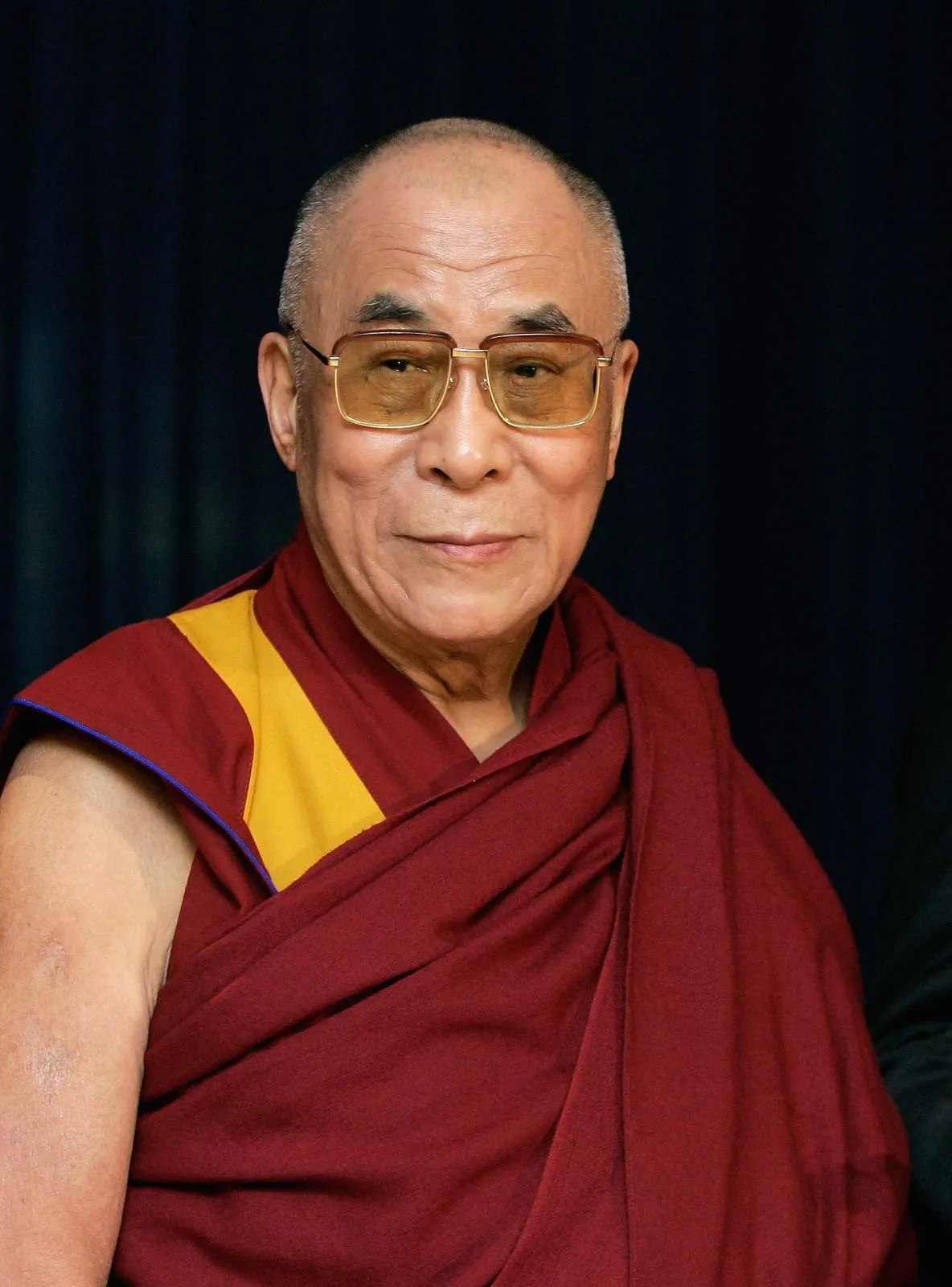
14th Dalai Lama
The spiritual leader of the Tibetan people and a global icon of peace, compassion, and non-violence, awarded the Nobel Peace Prize in 1989.
Nhà lãnh đạo tinh thần của người Tây Tạng và biểu tượng toàn cầu của hòa bình, lòng trắc ẩn và bất bạo động, được trao giải Nobel Hòa bình năm 1989.
This biography of 14th Dalai Lama helps you learn English through real historical stories. Explore 14th Dalai Lama's impact on the world.
born1935
diedPresent
nationalityTibetan
known foradvocating for Tibetan autonomy and global peace through non-violence
fieldreligion, philosophy, and global peace
Key Takeaways from this Biography
- He is the spiritual leader of Tibet and the 14th reincarnation of the Dalai LamaÔng là nhà lãnh đạo tinh thần của Tây Tạng và là hóa thân thứ 14 của Đạt Lai Lạt Ma
- He has lived in exile in Dharamsala, India since fleeing the 1959 Tibetan uprisingÔng đã sống lưu vong ở Dharamsala, Ấn Độ kể từ khi chạy trốn khỏi cuộc khởi nghĩa Tây Tạng năm 1959
- He won the 1989 Nobel Peace Prize for advocating non-violent solutions for TibetÔng đã giành giải Nobel Hòa bình năm 1989 vì ủng hộ các giải pháp phi bạo lực cho Tây Tạng
- He promotes the 'Middle Way Approach' and explores the intersection of Buddhism and scienceÔng thúc đẩy 'Cách tiếp cận Trung đạo' và khám phá sự giao thoa giữa Phật giáo và khoa học
Life Timeline
1935
Born Lhamo Thondup in Taktser, Amdo, TibetSinh ra với tên Lhamo Thondup ở Taktser, Amdo, Tây Tạng
1937
Recognized as the reincarnation of the 13th Dalai LamaĐược công nhận là hiện thân chuyển thế của Đạt Lai Lạt Ma thứ 13
1950
Assumed full political power after China's invasion of TibetNắm toàn quyền chính trị sau khi Trung Quốc đưa quân vào Tây Tạng
1959
Fled into exile in India after the failed Tibetan uprisingChạy trốn lưu vong sang Ấn Độ sau cuộc nổi dậy thất bại của người Tây Tạng
1989
Awarded the Nobel Peace PrizeĐược trao giải Nobel Hòa bình
2011
Devolved his political authority to a democratically elected leadershipTrao lại quyền lực chính trị của mình cho một ban lãnh đạo được bầu cử dân chủ
Biography Reading: 14th Dalai Lama
background
The 14th Dalai Lama, born Lhamo Thondup in 1935 in a small farming village in northeastern Tibet, was recognized at the age of two as the reincarnation of his predecessor. According to Tibetan Buddhist tradition, the Dalai Lamas are the earthly manifestations of Avalokiteshvara, the Bodhisattva of Compassion. He was brought to the capital city of Lhasa and underwent a rigorous monastic education encompassing logic, Tibetan culture, Sanskrit, medicine, and deep Buddhist philosophy. At just 15 years old, amidst the invasion of Tibet by the People's Republic of China, he was called upon to assume full political leadership of his people.
Đạt Lai Lạt Ma thứ 14, tên khai sinh là Lhamo Thondup vào năm 1935 tại một ngôi làng nông nghiệp nhỏ ở đông bắc Tây Tạng, đã được công nhận ở tuổi lên hai là hóa thân của người tiền nhiệm. Theo truyền thống Phật giáo Tây Tạng, các vị Đạt Lai Lạt Ma là hiện thân trần thế của Quán Thế Âm, vị Bồ tát của lòng từ bi. Ông được đưa đến thủ đô Lhasa và trải qua một nền giáo dục tu viện nghiêm ngặt bao gồm logic học, văn hóa Tây Tạng, tiếng Phạn, y học và triết học Phật giáo sâu sắc. Khi mới 15 tuổi, giữa cuộc xâm lược Tây Tạng của Cộng hòa Nhân dân Trung Hoa, ông đã được kêu gọi đảm nhận toàn bộ quyền lãnh đạo chính trị đối với dân tộc mình.
achievement
In 1959, following the brutal suppression of a Tibetan national uprising in Lhasa, the Dalai Lama was forced into exile. He undertook a perilous journey across the Himalayas to seek asylum in India, where he eventually established the Central Tibetan Administration in Dharamsala. For over six decades in exile, he has tirelessly advocated for the welfare of the Tibetan diaspora and the preservation of their unique cultural and religious identity. Despite the tragic loss of his homeland, he has strictly maintained a "Middle Way Approach," seeking genuine autonomy for Tibet within China through non-violent dialogue rather than absolute independence.
Năm 1959, sau sự đàn áp tàn bạo một cuộc khởi nghĩa quốc gia của người Tây Tạng ở Lhasa, Đạt Lai Lạt Ma buộc phải sống lưu vong. Ông đã thực hiện một cuộc hành trình đầy nguy hiểm qua dãy Himalaya để xin tị nạn ở Ấn Độ, nơi cuối cùng ông đã thành lập Chính quyền Trung ương Tây Tạng tại Dharamsala. Trong hơn sáu thập kỷ lưu vong, ông đã không mệt mỏi đấu tranh cho phúc lợi của cộng đồng người Tây Tạng hải ngoại và sự bảo tồn bản sắc văn hóa và tôn giáo độc đáo của họ. Bất chấp sự mất mát bi thảm của quê hương, ông vẫn nghiêm ngặt duy trì "Cách tiếp cận Trung đạo", tìm kiếm quyền tự trị thực sự cho Tây Tạng trong lãnh thổ Trung Quốc thông qua đối thoại phi bạo lực thay vì độc lập tuyệt đối.
impact
Beyond his political and religious duties, the Dalai Lama has become a universally respected icon of peace and interfaith harmony. He was awarded the Nobel Peace Prize in 1989 for his unwavering commitment to non-violence. He is also uniquely known for his deep enthusiasm for modern science, actively engaging in dialogues with neuroscientists and quantum physicists to explore the intersections between scientific discovery and ancient Buddhist mindfulness. He famously summarizes his teachings by saying, "My religion is very simple. My religion is kindness," reminding the world that compassion and inner peace are the ultimate foundations for a better future.
Vượt ra ngoài các nhiệm vụ chính trị và tôn giáo của mình, Đạt Lai Lạt Ma đã trở thành một biểu tượng hòa bình và sự hòa hợp giữa các tôn giáo được toàn thế giới tôn trọng. Ông đã được trao giải Nobel Hòa bình năm 1989 cho cam kết kiên định của mình đối với phi bạo lực. Ông cũng được biết đến một cách độc đáo với sự nhiệt tình sâu sắc đối với khoa học hiện đại, tích cực tham gia vào các cuộc đối thoại với các nhà khoa học thần kinh và nhà vật lý lượng tử để khám phá sự giao thoa giữa những khám phá khoa học và chánh niệm Phật giáo cổ đại. Ông tóm tắt những lời dạy của mình một cách nổi tiếng bằng câu nói: "Tôn giáo của tôi rất đơn giản. Tôn giáo của tôi là lòng nhân ái", nhắc nhở thế giới rằng lòng từ bi và sự bình yên nội tâm là những nền tảng tối thượng cho một tương lai tốt đẹp hơn.
Essential Vocabulary
reincarnationsự hóa thân / tái sinh
the rebirth of a soul in a new body
sự tái sinh của một linh hồn trong một cơ thể mới
manifestationsự biểu hiện / hiện thân
an event, action, or object that clearly shows or embodies something, especially a theory or an abstract idea
một sự kiện, hành động hoặc đối tượng thể hiện rõ ràng hoặc hiện thân của một cái gì đó, đặc biệt là một lý thuyết hoặc một ý tưởng trừu tượng
perilousđầy hiểm nguy
full of danger or risk
đầy rẫy sự nguy hiểm hoặc rủi ro
asylumsự tị nạn
the protection granted by a nation to someone who has left their native country as a political refugee
sự bảo vệ do một quốc gia cấp cho một người đã rời khỏi đất nước quê hương của họ như một người tị nạn chính trị
autonomyquyền tự trị
the right or condition of self-government, especially in a particular sphere
quyền hoặc điều kiện tự quản, đặc biệt là trong một lĩnh vực cụ thể
interfaithliên tôn giáo
relating to or involving people of different religions
liên quan đến hoặc bao gồm những người thuộc các tôn giáo khác nhau
Knowledge Check Quiz
FACTUAL1 / 4
Where did the Dalai Lama establish the Central Tibetan Administration in exile?
Flashcards
KNOWLEDGE
Who is the 14th Dalai Lama?
The spiritual leader of the Tibetan people and a global icon of peace.
1 / 9