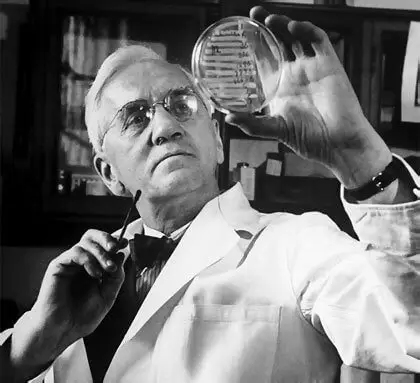
Alexander Fleming
A Scottish physician and microbiologist best known for discovering penicillin, the world's first broadly effective antibiotic, revolutionizing modern medicine.
Một bác sĩ và nhà vi sinh vật học người Scotland nổi tiếng với việc phát hiện ra penicillin, kháng sinh hiệu quả đầu tiên trên thế giới, cách mạng hóa y học hiện đại.
This biography of Alexander Fleming helps you learn English through real historical stories. Explore Alexander Fleming's impact on the world.
born1881
died1955
nationalityScottish
known fordiscovering penicillin and lysozyme
fieldmicrobiology and pharmacology
Key Takeaways from this Biography
- He discovered penicillin in 1928 after noticing a mold destroying bacteria in a petri dishÔng đã phát hiện ra penicillin vào năm 1928 sau khi nhận thấy một loại nấm mốc tiêu diệt vi khuẩn trong đĩa petri
- His discovery ushered in the era of antibiotics, revolutionizing modern medicineKhám phá của ông đã mở ra kỷ nguyên của thuốc kháng sinh, cách mạng hóa nền y học hiện đại
- He shared the 1945 Nobel Prize in Medicine with Florey and Chain, who helped mass-produce the drugÔng chia sẻ Giải Nobel Y học năm 1945 với Florey và Chain, những người đã giúp sản xuất hàng loạt loại thuốc này
- He served in WWI, where the tragedy of infected wounds inspired his research into antibacterial agentsÔng từng phục vụ trong Thế chiến I, nơi thảm kịch của những vết thương nhiễm trùng đã truyền cảm hứng cho nghiên cứu của ông về các chất kháng khuẩn
Life Timeline
1881
Born in Lochfield, ScotlandSinh ra ở Lochfield, Scotland
1906
Graduated with distinction from St Mary's Hospital Medical SchoolTốt nghiệp loại xuất sắc tại Trường Y Bệnh viện St Mary
1922
Discovered the enzyme lysozymePhát hiện ra enzyme lysozyme
1928
Discovered penicillin from a mold colonyKhám phá ra penicillin từ một loại nấm mốc
1945
Awarded the Nobel Prize in Physiology or MedicineĐoạt giải Nobel Sinh lý học hoặc Y học
1955
Died in London, EnglandQua đời ở London, Anh
Biography Reading: Alexander Fleming
background
Sir Alexander Fleming was born in 1881 in rural Scotland. After moving to London and working in a shipping office, a serendipitous inheritance allowed him to attend St Mary's Hospital Medical School. He proved to be a brilliant student and soon joined the research department under Almroth Wright, a pioneer in vaccine therapy. During World War I, Fleming served in the Royal Army Medical Corps, where witnessing the horrific death toll from infected wounds fueled his lifelong quest to find better antibacterial agents.
Ngài Alexander Fleming sinh năm 1881 tại vùng nông thôn Scotland. Sau khi chuyển đến London và làm việc tại một văn phòng vận tải biển, một khoản thừa kế tình cờ đã cho phép ông theo học tại Trường Y Bệnh viện St Mary. Ông chứng tỏ mình là một sinh viên xuất sắc và sớm gia nhập khoa nghiên cứu dưới quyền Almroth Wright, một người tiên phong trong liệu pháp vaccine. Trong Thế chiến thứ nhất, Fleming phục vụ trong Quân đoàn Y tế Quân đội Hoàng gia, nơi việc chứng kiến số người chết kinh hoàng do vết thương nhiễm trùng đã thôi thúc công cuộc tìm kiếm suốt đời của ông nhằm tìm ra các chất kháng khuẩn tốt hơn.
achievement
Fleming's most famous discovery occurred in September 1928, famously driven by a stroke of luck and a messy laboratory. Upon returning from a family vacation, he noticed that a petri dish containing Staphylococcus bacteria had been accidentally contaminated with a fungus. Strikingly, the bacteria immediately surrounding the fungus had been destroyed. He identified the mold as belonging to the Penicillium genus and named the active antibacterial substance "penicillin." He realized this substance could kill a wide range of harmful bacteria without being toxic to human cells.
Khám phá nổi tiếng nhất của Fleming diễn ra vào tháng 9 năm 1928, nổi tiếng là được thúc đẩy bởi một sự may mắn và một phòng thí nghiệm bừa bộn. Khi trở về sau một kỳ nghỉ cùng gia đình, ông nhận thấy một đĩa petri chứa vi khuẩn Staphylococcus đã vô tình bị nhiễm một loại nấm. Đáng chú ý, các vi khuẩn ngay xung quanh khu vực nấm đã bị tiêu diệt. Ông xác định loại nấm này thuộc chi Penicillium và đặt tên cho chất kháng khuẩn hoạt tính là "penicillin". Ông nhận ra chất này có thể tiêu diệt nhiều loại vi khuẩn có hại mà không gây độc cho tế bào con người.
impact
Although Fleming published his findings in 1929, it took over a decade and the collaborative brilliance of scientists Howard Florey and Ernst Chain to successfully purify and mass-produce penicillin. During World War II, this "miracle drug" saved countless lives from infection and amputations, ushering in the era of antibiotics. In 1945, Fleming, Florey, and Chain shared the Nobel Prize in Medicine. True to his humble nature, Fleming always maintained that "Nature makes penicillin, I just found it," yet his sharp observation fundamentally transformed global healthcare and human life expectancy.
Mặc dù Fleming đã công bố những phát hiện của mình vào năm 1929, phải mất hơn một thập kỷ cùng với sự thông minh hợp tác của các nhà khoa học Howard Florey và Ernst Chain để tinh chế và sản xuất hàng loạt penicillin thành công. Trong Thế chiến thứ hai, "loại thuốc kỳ diệu" này đã cứu vô số sinh mạng khỏi nhiễm trùng và bị cắt cụt chi, mở ra kỷ nguyên của thuốc kháng sinh. Năm 1945, Fleming, Florey và Chain đã cùng nhận giải Nobel Y học. Đúng với bản tính khiêm tốn của mình, Fleming luôn khẳng định rằng "Tự nhiên tạo ra penicillin, tôi chỉ tìm thấy nó", nhưng sự quan sát sắc bén của ông đã thay đổi hoàn toàn nền chăm sóc sức khỏe toàn cầu và tuổi thọ của con người.
Essential Vocabulary
serendipitoustình cờ / may mắn
occurring or discovered by chance in a happy or beneficial way
xảy ra hoặc được khám phá một cách tình cờ theo một cách vui vẻ hoặc có lợi
antibacterialkháng khuẩn
active against bacteria
có tác dụng chống lại vi khuẩn
contaminatedbị ô nhiễm / nhiễm khuẩn
having been made impure by exposure to or addition of a poisonous or polluting substance
bị làm cho không tinh khiết do tiếp xúc hoặc thêm vào một chất độc hoặc chất gây ô nhiễm
fungusnấm
any of a group of spore-producing organisms feeding on organic matter, including molds, yeast, and mushrooms
bất kỳ nhóm sinh vật sinh bào tử nào ăn chất hữu cơ, bao gồm nấm mốc, nấm men và nấm lớn
purifytinh chế / làm sạch
remove contaminants from
loại bỏ các chất ô nhiễm khỏi
amputationsự cắt cụt (chi)
the surgical removal of all or part of a limb or extremity
việc phẫu thuật cắt bỏ toàn bộ hoặc một phần của tay chân hoặc chi tiết ngoại vi
Knowledge Check Quiz
FACTUAL1 / 4
What is the name of the active antibacterial substance Alexander Fleming discovered in 1928?
Flashcards
KNOWLEDGE
Who discovered penicillin?
Alexander Fleming.
1 / 9