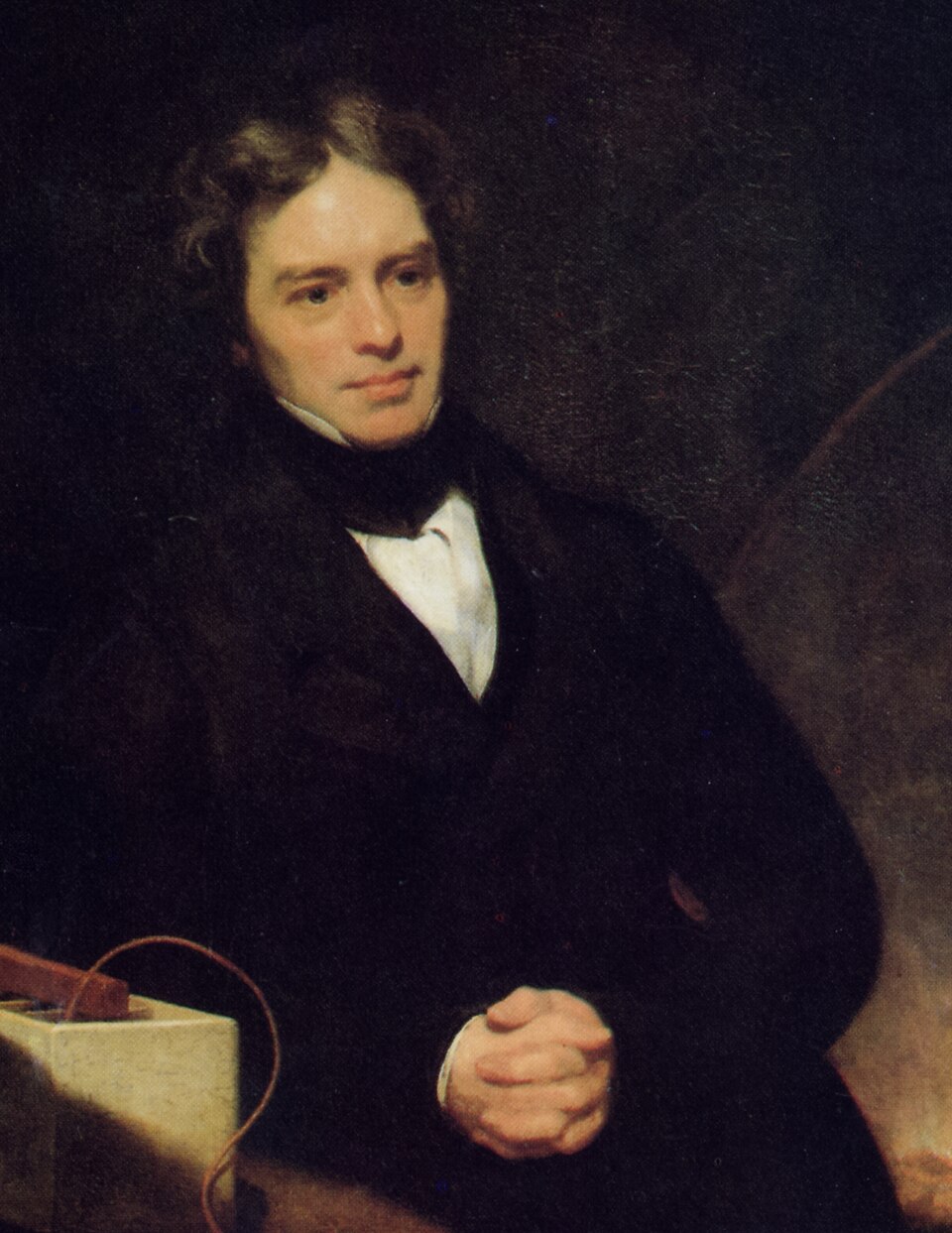
Michael Faraday
An English scientist whose foundational discoveries in electromagnetism and electrochemistry made electricity a practical source of power for the modern world.
Một nhà khoa học người Anh với những khám phá nền tảng về điện từ học và điện hóa học, biến điện thành nguồn năng lượng thực tiễn cho thế giới hiện đại.
This biography of Michael Faraday helps you learn English through real historical stories. Explore Michael Faraday's impact on the world.
born1791
died1867
nationalityEnglish
known forelectromagnetic induction, the electric motor, and the Faraday cage
fieldphysics and chemistry
Key Takeaways from this Biography
- He started as a bookbinder's apprentice and became one of history's greatest scientistsÔng bắt đầu với tư cách là người học việc đóng sách và trở thành một trong những nhà khoa học vĩ đại nhất lịch sử
- He invented the first electric motor, converting electrical energy into mechanical motionÔng đã phát minh ra động cơ điện đầu tiên, chuyển đổi năng lượng điện thành chuyển động cơ học
- He discovered electromagnetic induction, paving the way for the invention of electric generatorsÔng đã khám phá ra cảm ứng điện từ, mở đường cho việc phát minh ra máy phát điện
- He introduced the concept of electromagnetic fields and invented the Faraday cageÔng đã đưa ra khái niệm về trường điện từ và phát minh ra lồng Faraday
Life Timeline
1791
Born in Newington Butts, LondonSinh ra ở Newington Butts, London
1812
Attended lectures by Humphry Davy and became his assistantTham dự các bài giảng của Humphry Davy và trở thành trợ lý của ông
1821
Invented the first electric motorPhát minh ra động cơ điện đầu tiên
1831
Discovered electromagnetic induction, leading to the electric generatorKhám phá ra hiện tượng cảm ứng điện từ, dẫn đến sự ra đời của máy phát điện
1836
Invented the Faraday cage to block electromagnetic fieldsPhát minh ra lồng Faraday để chặn các trường điện từ
1867
Died in Hampton Court, LondonQua đời ở Hampton Court, London
Biography Reading: Michael Faraday
background
Michael Faraday was born in 1791 in London to a poor, working-class family. Receiving only a basic formal education, he began working as an errand boy and later an apprentice bookbinder at the age of 14. Surrounded by books, he developed a voracious appetite for reading, particularly works on science and electricity. His life changed completely in 1812 when he attended lectures by the eminent chemist Humphry Davy. Faraday bound his detailed notes from these lectures into a book and sent them to Davy, who was so impressed that he hired the young man as his laboratory assistant.
Michael Faraday sinh năm 1791 tại London trong một gia đình thuộc tầng lớp lao động nghèo. Chỉ nhận được một nền giáo dục chính quy cơ bản, ông bắt đầu làm công việc chạy việc vặt và sau đó là người học việc đóng sách ở tuổi 14. Được bao quanh bởi sách, ông đã phát triển một khao khát đọc sách mãnh liệt, đặc biệt là các tác phẩm về khoa học và điện học. Cuộc đời ông thay đổi hoàn toàn vào năm 1812 khi ông tham dự các bài giảng của nhà hóa học lỗi lạc Humphry Davy. Faraday đã đóng những ghi chép chi tiết của mình từ các bài giảng này thành một cuốn sách và gửi chúng cho Davy, người đã quá ấn tượng đến mức thuê chàng trai trẻ làm trợ lý phòng thí nghiệm của mình.
achievement
Working at the Royal Institution, Faraday transitioned from a humble assistant into one of the greatest experimental scientists in history. In 1821, he built the first electric motor, demonstrating that electrical energy could be converted into mechanical motion. A decade later, in 1831, he made his most crucial breakthrough: electromagnetic induction. By moving a magnet through a coil of copper wire, he generated an electric current. This monumental discovery proved that magnetism could produce electricity, leading directly to the invention of the electric transformer and the electric generator, the very foundation of the modern power grid.
Làm việc tại Viện Hoàng gia (Royal Institution), Faraday đã chuyển mình từ một trợ lý khiêm tốn thành một trong những nhà khoa học thực nghiệm vĩ đại nhất trong lịch sử. Năm 1821, ông đã chế tạo ra động cơ điện đầu tiên, chứng minh rằng năng lượng điện có thể được chuyển đổi thành chuyển động cơ học. Một thập kỷ sau, vào năm 1831, ông đã tạo ra bước đột phá quan trọng nhất của mình: cảm ứng điện từ. Bằng cách di chuyển một nam châm qua một cuộn dây đồng, ông đã tạo ra một dòng điện. Khám phá vĩ đại này đã chứng minh rằng từ tính có thể tạo ra điện, dẫn trực tiếp đến việc phát minh ra máy biến áp và máy phát điện, chính là nền tảng của mạng lưới điện hiện đại.
impact
Despite his lack of advanced mathematical training, Faraday's brilliant physical intuition allowed him to visualize invisible forces, introducing the concept of "lines of force" or electromagnetic fields. He also made major contributions to chemistry, including the discovery of benzene and the laws of electrolysis. In 1836, he invented the "Faraday cage," an enclosure that blocks external electromagnetic fields. A deeply humble and religious man, Faraday repeatedly declined a knighthood and the presidency of the Royal Society. Today, he is universally celebrated as the scientist who took electricity from a scientific curiosity and transformed it into a viable, world-changing source of power.
Bất chấp việc thiếu đào tạo toán học nâng cao, trực giác vật lý xuất chúng của Faraday đã cho phép ông hình dung ra các lực vô hình, đưa ra khái niệm "đường sức" hoặc trường điện từ. Ông cũng có những đóng góp lớn cho hóa học, bao gồm việc khám phá ra benzen và các định luật điện phân. Năm 1836, ông đã phát minh ra "Lồng Faraday", một lớp vỏ chặn các trường điện từ bên ngoài. Là một người vô cùng khiêm tốn và sùng đạo, Faraday đã nhiều lần từ chối tước hiệp sĩ và chức chủ tịch Hiệp hội Hoàng gia. Ngày nay, ông được toàn thế giới tôn vinh là nhà khoa học đã đưa điện năng từ một sự tò mò khoa học và biến nó thành một nguồn năng lượng khả thi, thay đổi thế giới.
Essential Vocabulary
apprenticengười học việc
a person who is learning a trade from a skilled employer
một người đang học một nghề từ một người chủ có kỹ năng
voraciousmãnh liệt / ngấu nghiến
wanting or devouring great quantities of food or information
muốn hoặc ngấu nghiến một lượng lớn thức ăn hoặc thông tin
inductionsự cảm ứng
the production of an electric or magnetic state by the proximity of an electrified or magnetized body
việc tạo ra trạng thái điện hoặc từ tính do sự gần gũi của một vật thể bị điện khí hóa hoặc nhiễm từ
intuitiontrực giác
the ability to understand something immediately, without the need for conscious reasoning
khả năng hiểu một điều gì đó ngay lập tức, mà không cần suy luận có ý thức
enclosurelớp vỏ / khu vực khép kín
an area that is sealed off with an artificial or natural barrier
một khu vực được niêm phong bằng một hàng rào nhân tạo hoặc tự nhiên
viablekhả thi
capable of working successfully; feasible
có khả năng hoạt động thành công; khả thi
Knowledge Check Quiz
FACTUAL1 / 4
What did Michael Faraday use to generate an electric current in 1831?
Flashcards
KNOWLEDGE
Who discovered electromagnetic induction?
Michael Faraday.
1 / 9