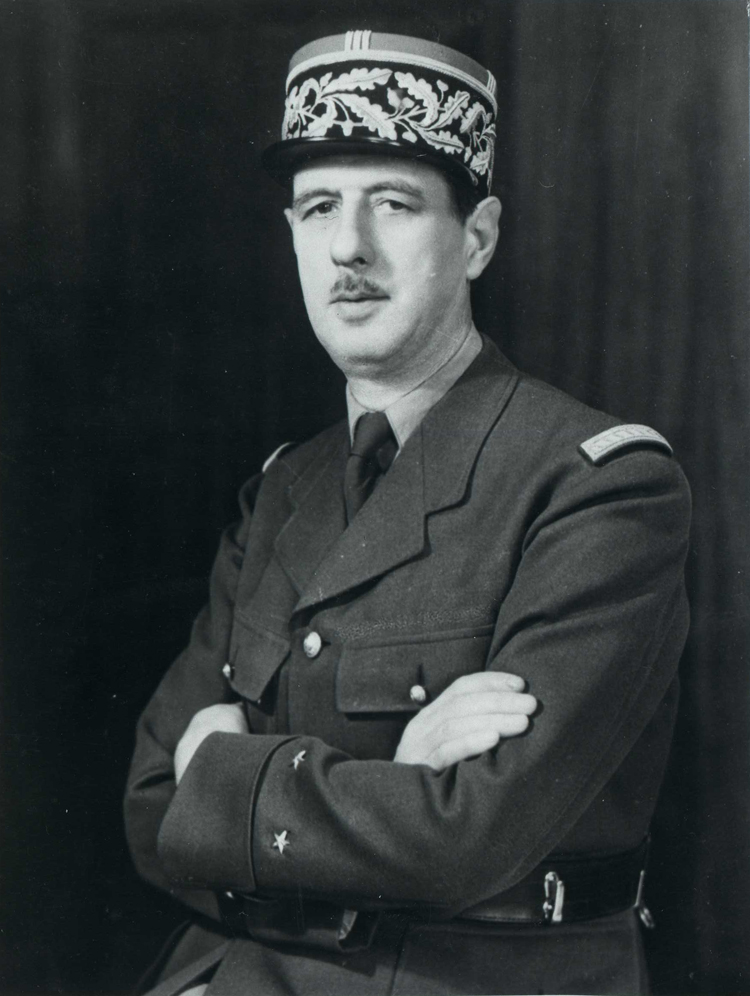
Charles de Gaulle
A French army officer and statesman who led Free France against Nazi Germany and later founded the Fifth Republic, serving as its first President.
Một sĩ quan quân đội và chính khách người Pháp, người lãnh đạo Nước Pháp Tự do chống lại Đức Quốc xã và sau đó thành lập Đệ Ngũ Cộng hòa, trở thành Tổng thống đầu tiên của nó.
This biography of Charles de Gaulle helps you learn English through real historical stories. Explore Charles de Gaulle's impact on the world.
born1890
died1970
nationalityFrench
known forLeading the French Resistance in WWII and architect of the Fifth Republic
fieldpolitics and military leadership
Key Takeaways from this Biography
- He led the Free French Forces during WWII and became the symbol of French ResistanceÔng đã lãnh đạo Lực lượng Pháp Tự do trong Thế chiến II và trở thành biểu tượng của kháng chiến Pháp
- He founded the Fifth Republic in 1958, establishing a strong presidential systemÔng thành lập nền Đệ ngũ Cộng hòa năm 1958, thiết lập một hệ thống tổng thống mạnh mẽ
- He resolved the bloody Algerian War of Independence, preventing a French civil warÔng đã giải quyết cuộc Chiến tranh Độc lập Algeria đẫm máu, ngăn chặn một cuộc nội chiến ở Pháp
- He pursued a 'policy of grandeur,' asserting French independence from both the US and USSRÔng theo đuổi 'chính sách vĩ đại', khẳng định sự độc lập của Pháp đối với cả Hoa Kỳ và Liên Xô
Life Timeline
1890
Born in Lille, FranceSinh ra ở Lille, Pháp
1940
Delivered the June 18 Appeal from London, urging French resistance against Nazi occupationĐọc Lời kêu gọi ngày 18 tháng 6 từ London, thúc giục phong trào kháng chiến của Pháp chống lại sự chiếm đóng của Đức Quốc xã
1944
Led the liberation of Paris and became head of the provisional governmentLãnh đạo cuộc giải phóng Paris và trở thành người đứng đầu chính phủ lâm thời
1958
Returned to power to resolve the Algerian Crisis and founded the Fifth RepublicTrở lại nắm quyền để giải quyết Khủng hoảng Algeria và thành lập Nền Cộng hòa thứ Năm
1959
Inaugurated as the first President of the Fifth RepublicNhậm chức Tổng thống đầu tiên của Nền Cộng hòa thứ Năm
1970
Died in Colombey-les-Deux-ÉglisesQua đời ở Colombey-les-Deux-Églises
Biography Reading: Charles de Gaulle
background
Charles de Gaulle was born in 1890 into a family with a strong tradition of patriotism and Catholicism. A career soldier, he fought with distinction in World War I, where he was wounded and taken prisoner. In the interwar years, he became a vocal advocate for mechanized armored warfare, though his visionary ideas were largely ignored by the French military establishment. When France fell to Nazi Germany in 1940, de Gaulle fled to London, refusing to accept the armistice signed by the Vichy government.
Charles de Gaulle sinh năm 1890 trong một gia đình có truyền thống yêu nước và Công giáo mạnh mẽ. Là một quân nhân chuyên nghiệp, ông đã chiến đấu xuất sắc trong Thế chiến I, nơi ông bị thương và bị bắt làm tù binh. Trong những năm giữa hai cuộc thế chiến, ông trở thành người ủng hộ mạnh mẽ cho chiến tranh thiết giáp cơ giới hóa, mặc dù những ý tưởng có tầm nhìn xa trông rộng của ông phần lớn bị giới quân sự Pháp phớt lờ. Khi Pháp rơi vào tay Đức Quốc xã năm 1940, de Gaulle đã trốn sang London, từ chối chấp nhận hiệp định đình chiến do chính phủ Vichy ký kết.
achievement
On June 18, 1940, de Gaulle delivered a historic broadcast on the BBC, declaring that "France has lost a battle, but France has not lost the war." As the leader of the Free French Forces, he tirelessly worked to maintain French sovereignty and legitimacy among the Allied powers. After the liberation of Paris in 1944, he presided over the provisional government but resigned in 1946 due to disagreements over the new constitution. He retired from public life, waiting for the moment when his country would truly need his leadership again.
Vào ngày 18 tháng 6 năm 1940, de Gaulle đã thực hiện một buổi phát thanh lịch sử trên đài BBC, tuyên bố rằng "Nước Pháp đã thua một trận đánh, nhưng nước Pháp chưa thua cả cuộc chiến." Với tư cách là người lãnh đạo Lực lượng Pháp Tự do, ông đã làm việc không mệt mỏi để duy trì chủ quyền và sự chính thống của Pháp trong mắt các cường quốc Đồng minh. Sau khi giải phóng Paris năm 1944, ông chủ trì chính phủ lâm thời nhưng đã từ chức vào năm 1946 do những bất đồng về hiến pháp mới. Ông rút lui khỏi đời sống công chúng, chờ đợi thời điểm đất nước thực sự cần đến sự lãnh đạo của ông một lần nữa.
impact
That moment arrived in 1958 during the Algerian War of Independence, which threatened to spark a civil war in France. De Gaulle returned as Prime Minister and drafted a new constitution that strengthened the executive branch, creating the Fifth Republic. As President, he ended the Algerian conflict, modernized the French economy, and pursued an independent foreign policy, famously withdrawing France from NATO's integrated military command. His vision of "Gaullism"—emphasizing national independence and a strong state—continues to be the bedrock of modern French political identity.
Thời điểm đó đã đến vào năm 1958 trong cuộc Chiến tranh Độc lập Algeria, cuộc chiến đe dọa châm ngòi cho một cuộc nội chiến ở Pháp. De Gaulle trở lại với tư cách là Thủ tướng và soạn thảo một bản hiến pháp mới nhằm tăng cường quyền hành pháp, tạo ra nền Đệ ngũ Cộng hòa. Với tư cách là Tổng thống, ông đã chấm dứt cuộc xung đột Algeria, hiện đại hóa nền kinh tế Pháp và theo đuổi một chính sách đối ngoại độc lập, đáng chú ý là việc rút Pháp khỏi bộ chỉ huy quân sự tích hợp của NATO. Tầm nhìn về "Chủ nghĩa De Gaulle"—nhấn mạnh vào sự độc lập dân tộc và một nhà nước mạnh mẽ—tiếp tục là nền tảng của bản sắc chính trị Pháp hiện đại.
Essential Vocabulary
sovereigntychủ quyền
supreme power or authority; the authority of a state to govern itself
quyền lực hoặc chính quyền tối cao; quyền hạn của một quốc gia để tự cai trị chính mình
legitimacysự chính thống / tính hợp pháp
conformity to the law or to rules; the quality of being valid or acceptable
sự phù hợp với luật pháp hoặc các quy tắc; phẩm chất của việc có giá trị hoặc được chấp nhận
provisionallâm thời
arranged or existing for the present, possibly to be changed later
được sắp xếp hoặc tồn tại trong hiện tại, có thể được thay đổi sau này
executive branchnhánh hành pháp
the branch of government charged with the execution and enforcement of laws and policies
nhánh chính phủ chịu trách nhiệm thực thi và cưỡng chế luật pháp và các chính sách
integratedtích hợp / hợp nhất
with various parts or aspects linked or coordinated
với các bộ phận hoặc khía cạnh khác nhau được liên kết hoặc phối hợp
bedrocknền tảng
the fundamental principles on which something is based
những nguyên tắc cơ bản mà dựa trên đó một cái gì đó được xây dựng
Knowledge Check Quiz
FACTUAL1 / 4
What is the name of the current French political system founded by Charles de Gaulle in 1958?
Flashcards
KNOWLEDGE
Who was the leader of the Free French Forces during World War II?
Charles de Gaulle.
1 / 9