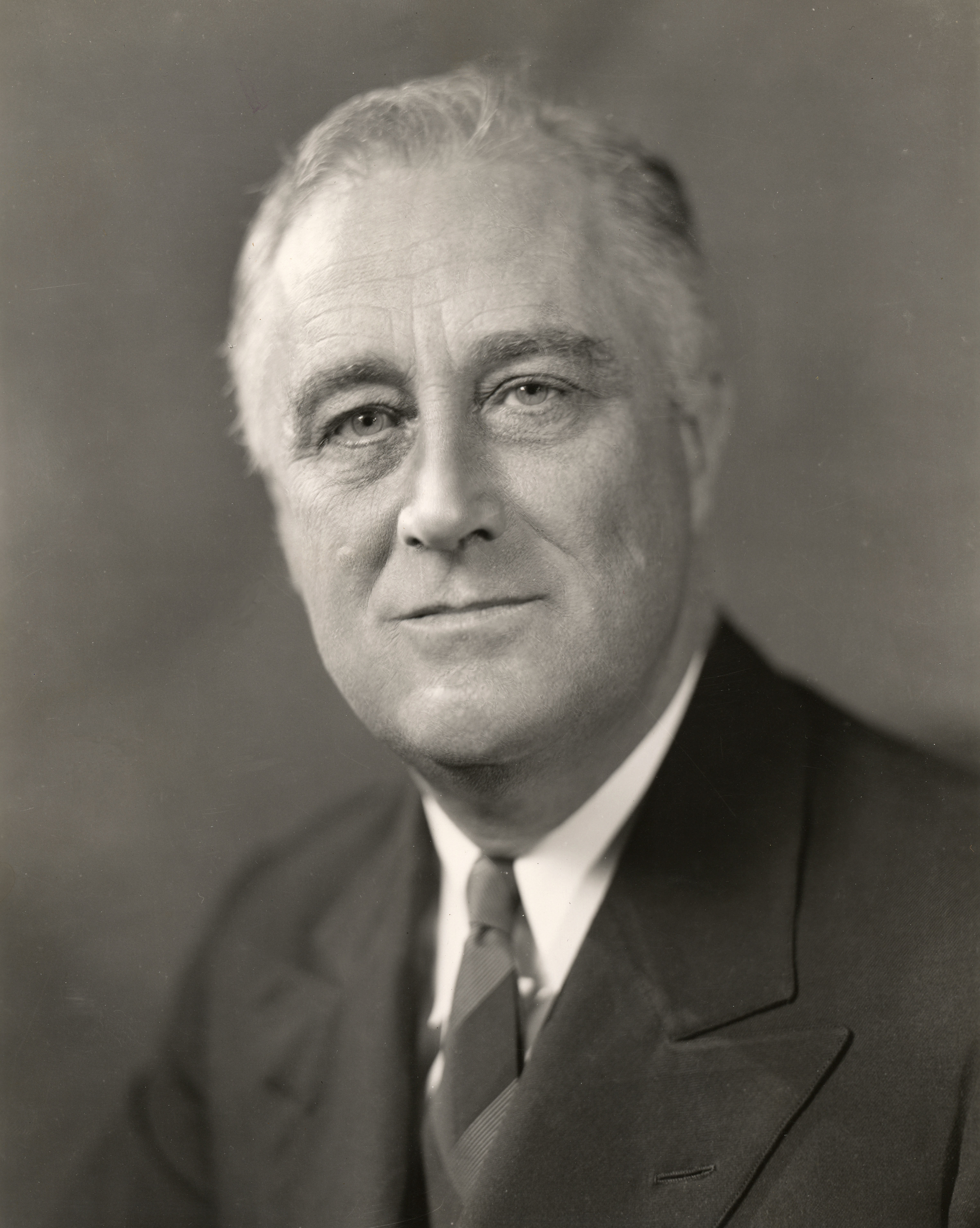
Franklin D. Roosevelt
The 32nd President of the United States who guided the nation through the Great Depression with his New Deal programs and led the country to victory in World War II.
Tổng thống thứ 32 của Hoa Kỳ, người đã dẫn dắt quốc gia vượt qua Đại Suy thoái với các chương trình New Deal và lãnh đạo đất nước đến chiến thắng trong Thế chiến thứ hai.
This biography of Franklin D. Roosevelt helps you learn English through real historical stories. Explore Franklin D. Roosevelt's impact on the world.
born1882
died1945
nationalityAmerican
known forThe New Deal and leading the US through World War II
fieldpolitics and crisis leadership
Key Takeaways from this Biography
- He is the only US President in history to be elected to four termsÔng là Tổng thống Hoa Kỳ duy nhất trong lịch sử đắc cử bốn nhiệm kỳ
- He guided the United States through the Great Depression with his sweeping 'New Deal' economic reformsÔng đã dẫn dắt Hoa Kỳ vượt qua cuộc Đại suy thoái bằng các cải cách kinh tế 'Kinh tế Mới' sâu rộng của mình
- He contracted polio in 1921 and remained paralyzed from the waist down for the rest of his lifeÔng mắc bệnh bại liệt vào năm 1921 và bị liệt từ thắt lưng trở xuống trong suốt phần đời còn lại
- He led the nation to victory in World War II, transforming America into an 'arsenal of democracy'Ông đã lãnh đạo đất nước đi đến chiến thắng trong Thế chiến II, biến nước Mỹ thành một 'kho vũ khí của nền dân chủ'
Life Timeline
1882
Born in Hyde Park, New YorkSinh ra ở Hyde Park, New York
1921
Contracted polio, leaving his legs permanently paralyzedMắc bệnh bại liệt, khiến đôi chân bị liệt vĩnh viễn
1932
Elected as the 32nd President of the United StatesĐược bầu làm Tổng thống thứ 32 của Hoa Kỳ
1933
Launched the 'New Deal' to combat the Great DepressionPhát động 'Chính sách Mới' (New Deal) để chống lại cuộc Đại suy thoái
1941
Delivered the 'Infamy Speech' after Pearl Harbor, entering WWIIĐọc 'Bài diễn văn về ngày ô nhục' sau trận Trân Châu Cảng, đưa đất nước bước vào Thế chiến II
1945
Died in office just weeks before the Allied victory in EuropeQua đời khi đang tại nhiệm chỉ vài tuần trước chiến thắng của phe Đồng minh ở châu Âu
Biography Reading: Franklin D. Roosevelt
background
Franklin Delano Roosevelt, often referred to by his initials FDR, was born in 1882 into a wealthy and prominent family in New York. His promising political career was nearly derailed in 1921 when he contracted polio, an illness that left him permanently paralyzed from the waist down. Displaying extraordinary resilience, he painstakingly taught himself to walk short distances with iron braces and a cane. This profound personal struggle cultivated a deep sense of empathy for the suffering of others, a quality that would define his historic presidency.
Franklin Delano Roosevelt, thường được gọi bằng tên viết tắt FDR, sinh năm 1882 trong một gia đình giàu có và danh giá ở New York. Sự nghiệp chính trị đầy hứa hẹn của ông gần như bị chệch hướng vào năm 1921 khi ông mắc bệnh bại liệt, căn bệnh khiến ông bị liệt vĩnh viễn từ thắt lưng trở xuống. Thể hiện sự kiên cường phi thường, ông đã nhọc nhằn tự học cách đi bộ những quãng đường ngắn bằng nẹp sắt và gậy. Cuộc đấu tranh cá nhân sâu sắc này đã nuôi dưỡng một sự đồng cảm sâu sắc đối với nỗi đau khổ của người khác, một phẩm chất sẽ định hình nhiệm kỳ tổng thống lịch sử của ông.
achievement
Elected as the 32nd President of the United States in 1932 during the darkest days of the Great Depression, FDR immediately set to work to restore national confidence. In his inaugural address, he famously declared, "The only thing we have to fear is fear itself." He quickly implemented his sweeping "New Deal" programs, a series of unprecedented economic reforms, public works projects, and financial regulations designed to provide relief for the unemployed and recovery for the economy, fundamentally expanding the role of the federal government.
Được bầu làm Tổng thống thứ 32 của Hoa Kỳ vào năm 1932 trong những ngày đen tối nhất của cuộc Đại suy thoái, FDR lập tức bắt tay vào việc khôi phục niềm tin quốc gia. Trong bài diễn văn nhậm chức của mình, ông đã tuyên bố nổi tiếng: "Điều duy nhất chúng ta phải sợ hãi chính là nỗi sợ hãi". Ông nhanh chóng thực hiện các chương trình "Kinh tế Mới" (New Deal) sâu rộng của mình, một loạt các cải cách kinh tế, dự án công trình công cộng và quy định tài chính chưa từng có được thiết kế để cung cấp cứu trợ cho người thất nghiệp và phục hồi nền kinh tế, mở rộng căn bản vai trò của chính phủ liên bang.
impact
Before the nation could fully heal, FDR faced a second existential crisis: World War II. Following the devastating Japanese attack on Pearl Harbor in 1941, he adeptly transitioned the United States into an "arsenal of democracy," mobilizing the country's vast industrial might to defeat the Axis powers. As the only U.S. president ever elected to four terms, his unparalleled leadership guided America through two of the greatest crises of the 20th century. Exhausted by the immense burden of wartime leadership, he died in April 1945, just weeks before the final Allied victory in Europe.
Trước khi đất nước có thể hoàn toàn chữa lành, FDR phải đối mặt với một cuộc khủng hoảng hiện sinh thứ hai: Thế chiến II. Sau cuộc tấn công tàn khốc của Nhật Bản vào Trân Châu Cảng năm 1941, ông đã khéo léo chuyển đổi Hoa Kỳ thành một "kho vũ khí của nền dân chủ", huy động sức mạnh công nghiệp to lớn của đất nước để đánh bại các cường quốc phe Trục. Là tổng thống Hoa Kỳ duy nhất từng đắc cử bốn nhiệm kỳ, sự lãnh đạo vô song của ông đã dẫn dắt nước Mỹ vượt qua hai trong số những cuộc khủng hoảng lớn nhất của thế kỷ 20. Kiệt sức vì gánh nặng to lớn của việc lãnh đạo thời chiến, ông qua đời vào tháng 4 năm 1945, chỉ vài tuần trước chiến thắng cuối cùng của phe Đồng minh ở châu Âu.
Essential Vocabulary
deraillàm chệch hướng / cản trở
obstruct a process by diverting it from its intended course
cản trở một quá trình bằng cách chuyển hướng nó khỏi tiến trình dự kiến
resiliencesự kiên cường / khả năng phục hồi
the capacity to withstand or to recover quickly from difficulties
khả năng chịu đựng hoặc phục hồi nhanh chóng sau những khó khăn
inauguralnhậm chức / mở đầu
marking the beginning of an institution, activity, or period of office
đánh dấu sự khởi đầu của một thể chế, hoạt động hoặc nhiệm kỳ
sweepingsâu rộng / bao quát
wide in range or effect
rộng lớn về phạm vi hoặc hiệu ứng
existentialhiện sinh / đe dọa sự tồn vong
concerned with existence, especially with human existence or a threat to survival
liên quan đến sự tồn tại, đặc biệt là với sự tồn tại của con người hoặc mối đe dọa đối với sự sống còn
arsenalkho vũ khí
a collection of weapons and military equipment stored by a country, person, or group
bộ sưu tập vũ khí và thiết bị quân sự được cất giữ bởi một quốc gia, cá nhân hoặc nhóm
Knowledge Check Quiz
FACTUAL1 / 4
What major economic program did FDR implement to combat the Great Depression?
Flashcards
KNOWLEDGE
What physical illness left Franklin D. Roosevelt paralyzed from the waist down?
Polio.
1 / 9