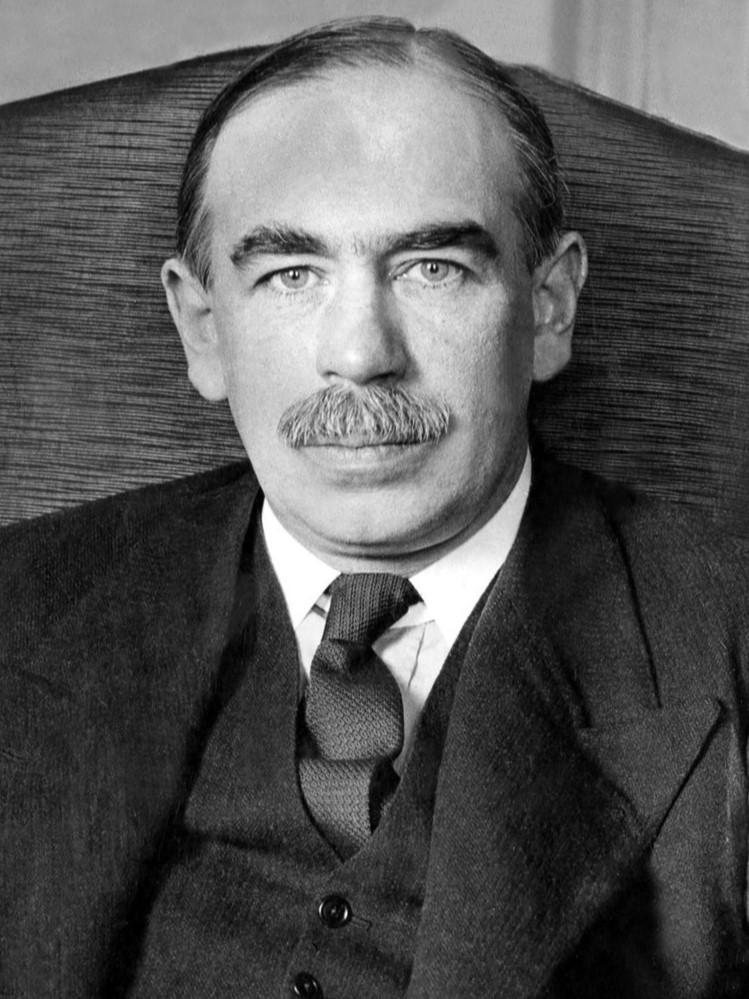
John M Keynes
A British economist whose ideas fundamentally changed the theory and practice of macroeconomics and the economic policies of governments.
Một nhà kinh tế học người Anh với các ý tưởng đã thay đổi căn bản lý thuyết và thực hành kinh tế vĩ mô cũng như chính sách kinh tế của các chính phủ.
This biography of John M Keynes helps you learn English through real historical stories. Explore John M Keynes's impact on the world.
born1883
died1946
nationalityBritish
known forKeynesian economics, The General Theory
fieldeconomics
Key Takeaways from this Biography
- He is the founding father of modern macroeconomics and Keynesian economicsÔng là cha đẻ của kinh tế vĩ mô hiện đại và kinh tế học Keynes
- He argued that government intervention and spending are necessary to manage economic recessionsÔng lập luận rằng sự can thiệp và chi tiêu của chính phủ là cần thiết để quản lý suy thoái kinh tế
- He wrote 'The General Theory', fundamentally changing how the world views free marketsÔng đã viết 'Lý thuyết tổng quát', thay đổi cơ bản cách thế giới nhìn nhận thị trường tự do
- He helped establish the IMF and World Bank at the Bretton Woods ConferenceÔng đã giúp thành lập IMF và Ngân hàng Thế giới tại Hội nghị Bretton Woods
Life Timeline
1883
Born in Cambridge, EnglandSinh ra ở Cambridge, Anh
1919
Published 'The Economic Consequences of the Peace'Xuất bản 'Những hậu quả kinh tế của hòa bình'
1936
Published 'The General Theory of Employment, Interest and Money'Xuất bản 'Lý thuyết tổng quát về việc làm, lãi suất và tiền tệ'
1944
Played a central role at the Bretton Woods ConferenceĐóng vai trò trung tâm tại Hội nghị Bretton Woods
1946
Died in Sussex, EnglandQua đời ở Sussex, Anh
Biography Reading: John M Keynes
background
John Maynard Keynes was born in 1883 in Cambridge, England, into an academic family. He studied mathematics at King's College, Cambridge, but soon developed a deep interest in economics under the guidance of Alfred Marshall. During World War I, he worked for the British Treasury, but he gained international fame in 1919 when he resigned in protest over the Treaty of Versailles. In his bestselling book, "The Economic Consequences of the Peace," he accurately predicted that the harsh reparations imposed on Germany would lead to economic ruin and future conflict.
John Maynard Keynes sinh năm 1883 tại Cambridge, Anh, trong một gia đình học thuật. Ông theo học toán tại King's College, Cambridge, nhưng sớm phát triển niềm đam mê sâu sắc với kinh tế học dưới sự hướng dẫn của Alfred Marshall. Trong Thế chiến I, ông làm việc cho Bộ Tài chính Anh, nhưng ông đã giành được danh tiếng quốc tế vào năm 1919 khi từ chức để phản đối Hiệp ước Versailles. Trong cuốn sách bán chạy nhất của mình, "Hậu quả kinh tế của hòa bình", ông đã dự đoán chính xác rằng những khoản bồi thường khắc nghiệt áp đặt lên Đức sẽ dẫn đến sự tàn phá kinh tế và xung đột trong tương lai.
achievement
The Great Depression of the 1930s shattered the classical economic belief that free markets would automatically provide full employment. Observing the prolonged mass unemployment, Keynes published his magnum opus, "The General Theory of Employment, Interest and Money" in 1936. He revolutionized economic thought by arguing that overall demand determines the level of economic activity. When private demand falls, he asserted, the government must step in to stimulate the economy through deficit spending, public works, and lower taxes, effectively managing the "boom and bust" cycles of capitalism.
Cuộc Đại suy thoái những năm 1930 đã phá vỡ niềm tin kinh tế học cổ điển rằng thị trường tự do sẽ tự động cung cấp việc làm đầy đủ. Quan sát tình trạng thất nghiệp hàng loạt kéo dài, Keynes đã xuất bản kiệt tác của mình, "Lý thuyết tổng quát về việc làm, tiền lãi và tiền tệ" vào năm 1936. Ông đã cách mạng hóa tư duy kinh tế bằng cách lập luận rằng tổng cầu quyết định mức độ hoạt động kinh tế. Ông khẳng định rằng khi nhu cầu tư nhân giảm, chính phủ phải can thiệp để kích thích nền kinh tế thông qua chi tiêu thâm hụt, các công trình công cộng và giảm thuế, quản lý hiệu quả các chu kỳ "bùng nổ và suy thoái" của chủ nghĩa tư bản.
impact
Keynes's ideas, which became known as "Keynesian economics," profoundly reshaped Western economic policies for decades following World War II. In 1944, he was a leading architect at the Bretton Woods Conference, helping to establish the International Monetary Fund (IMF) and the World Bank to rebuild the post-war global economy. Although the dominance of his theories waned in the 1970s with the rise of monetarism, his concepts saw a massive resurgence during the 2008 global financial crisis. Today, Keynes is widely regarded as the founding father of modern macroeconomics, proving that government intervention can be a vital tool for economic stability.
Những ý tưởng của Keynes, được biết đến với tên gọi "Kinh tế học Keynes", đã định hình lại sâu sắc các chính sách kinh tế phương Tây trong nhiều thập kỷ sau Thế chiến II. Năm 1944, ông là kiến trúc sư hàng đầu tại Hội nghị Bretton Woods, giúp thành lập Quỹ Tiền tệ Quốc tế (IMF) và Ngân hàng Thế giới để thiết lập lại nền kinh tế toàn cầu sau chiến tranh. Mặc dù sự thống trị của các lý thuyết của ông suy giảm vào những năm 1970 với sự trỗi dậy của chủ nghĩa tiền tệ, các khái niệm của ông đã chứng kiến sự hồi sinh mạnh mẽ trong cuộc khủng hoảng tài chính toàn cầu năm 2008. Ngày nay, Keynes được coi rộng rãi là cha đẻ của kinh tế vĩ mô hiện đại, chứng minh rằng sự can thiệp của chính phủ có thể là một công cụ quan trọng cho sự ổn định kinh tế.
Essential Vocabulary
macroeconomicskinh tế vĩ mô
the part of economics concerned with large-scale or general economic factors
bộ phận của kinh tế học liên quan đến các yếu tố kinh tế quy mô lớn hoặc tổng quát
reparationssự bồi thường chiến tranh
the making of amends for a wrong one has done, by paying money to those who have been wronged
việc sửa chữa một sai lầm mà một người đã làm, bằng cách trả tiền cho những người bị thiệt hại
deficit spendingchi tiêu thâm hụt
government spending, in excess of revenue, of funds raised by borrowing rather than from taxation
chi tiêu của chính phủ, vượt quá doanh thu, từ các quỹ huy động được bằng cách đi vay thay vì từ thuế
resurgencesự hồi sinh / trỗi dậy
an increase or revival after a period of little activity, popularity, or occurrence
sự gia tăng hoặc phục hồi sau một thời gian ít hoạt động, ít phổ biến hoặc ít xảy ra
stimulatekích thích
encourage development of or increased activity in a state or process
khuyến khích sự phát triển hoặc gia tăng hoạt động trong một trạng thái hoặc quá trình
interventionsự can thiệp
the action or process of intervening, especially government interference in economic affairs
hành động hoặc quá trình can thiệp, đặc biệt là sự can thiệp của chính phủ vào các vấn đề kinh tế
Knowledge Check Quiz
FACTUAL1 / 4
What is the name of John Maynard Keynes's most famous book published in 1936?
Flashcards
KNOWLEDGE
Who is considered the founding father of modern macroeconomics?
John Maynard Keynes.
1 / 9