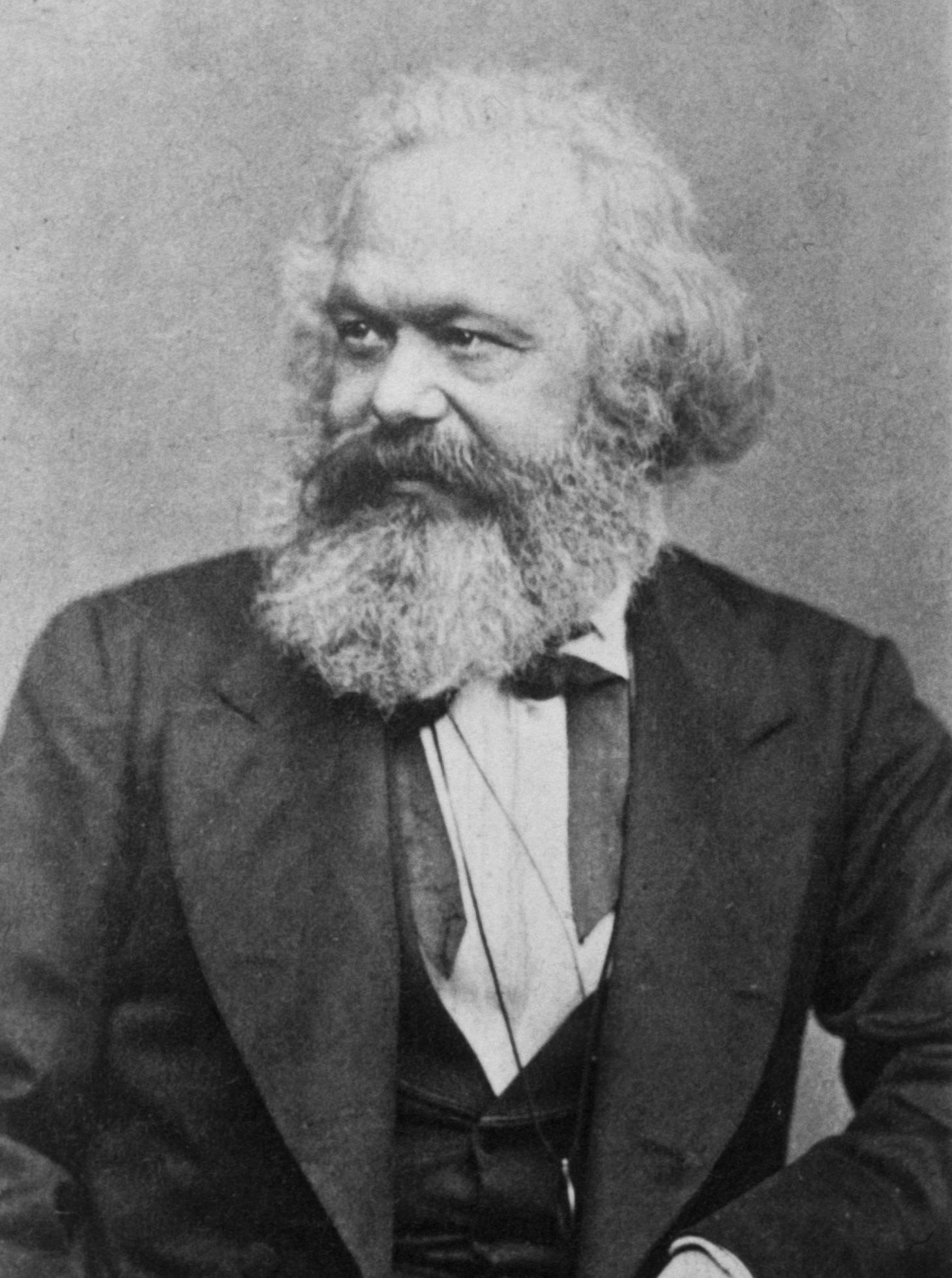
Karl Marx
A 19th-century German philosopher, economist, and revolutionary whose theories on capitalism and class struggle formed the basis of Marxism.
Một triết gia, nhà kinh tế và nhà cách mạng người Đức thế kỷ 19 với các lý thuyết về chủ nghĩa tư bản và đấu tranh giai cấp, đặt nền tảng cho chủ nghĩa Marx.
This biography of Karl Marx helps you learn English through real historical stories. Explore Karl Marx's impact on the world.
born1818
died1883
nationalityGerman
known forThe Communist Manifesto, Das Kapital, and founding Marxism
fieldphilosophy, economics, and political theory
Key Takeaways from this Biography
- He co-authored The Communist Manifesto and wrote Das Kapital, foundational texts of Marxist theoryÔng là đồng tác giả Tuyên ngôn Đảng Cộng sản và viết Tư bản luận, những văn bản nền tảng của lý thuyết Mác-xít
- He viewed human history as a continuous struggle between different social classesÔng coi lịch sử nhân loại là một cuộc đấu tranh liên tục giữa các tầng lớp xã hội khác nhau
- He argued that capitalism exploits the working class (proletariat) to generate surplus value for the owners (bourgeoisie)Ông lập luận rằng chủ nghĩa tư bản bóc lột giai cấp công nhân (vô sản) để tạo ra giá trị thặng dư cho giới chủ (tư sản)
- He predicted that a worker's revolution would ultimately establish a classless, stateless communist societyÔng dự đoán rằng một cuộc cách mạng của công nhân cuối cùng sẽ thiết lập một xã hội cộng sản không giai cấp, không nhà nước
Life Timeline
1818
Born in Trier, PrussiaSinh ra ở Trier, Phổ
1848
Published 'The Communist Manifesto' with Friedrich EngelsXuất bản 'Tuyên ngôn của Đảng Cộng sản' cùng với Friedrich Engels
1849
Exiled to London, where he spent the rest of his lifeBị lưu đày đến London, nơi ông sống phần đời còn lại
1867
Published the first volume of 'Das Kapital'Xuất bản tập đầu tiên của 'Tư bản luận'
1883
Died in London, EnglandQua đời ở London, Anh
Biography Reading: Karl Marx
background
Karl Marx was born in 1818 in Trier, Prussia (modern-day Germany), into a middle-class family. He studied law and philosophy at the universities of Bonn and Berlin, where he became deeply influenced by the ideas of G.W.F. Hegel. As a young journalist and radical thinker, Marx’s sharp criticisms of European governments and social institutions frequently led to censorship and exile. He eventually settled in London, where he spent decades studying political economy in the reading room of the British Museum, supported financially and intellectually by his lifelong friend and collaborator, Friedrich Engels.
Karl Marx sinh năm 1818 tại Trier, Phổ (Đức ngày nay), trong một gia đình trung lưu. Ông học luật và triết học tại các trường đại học Bonn và Berlin, nơi ông chịu ảnh hưởng sâu sắc bởi những tư tưởng của G.W.F. Hegel. Là một nhà báo trẻ và nhà tư tưởng cấp tiến, những lời chỉ trích sắc bén của Marx đối với các chính phủ và thể chế xã hội châu Âu thường xuyên dẫn đến việc ông bị kiểm duyệt và lưu vong. Cuối cùng, ông định cư ở London, nơi ông dành nhiều thập kỷ để nghiên cứu kinh tế chính trị trong phòng đọc của Bảo tàng Anh, được hỗ trợ về mặt tài chính và trí tuệ bởi người bạn và cộng sự trọn đời của ông, Friedrich Engels.
achievement
Marx is best known for his revolutionary critique of capitalism. In 1848, he and Engels published "The Communist Manifesto," a politically charged pamphlet that famously declared, "The history of all hitherto existing society is the history of class struggles." Marx argued that the capitalist system is inherently exploitative, built on the conflict between the "bourgeoisie" (the wealthy owners of the means of production) and the "proletariat" (the working class who must sell their labor to survive). He believed that capitalism inevitably alienates workers from the products of their labor and creates the very conditions that will lead to its own destruction.
Marx nổi tiếng nhất với những chỉ trích mang tính cách mạng đối với chủ nghĩa tư bản. Năm 1848, ông và Engels đã xuất bản "Tuyên ngôn của Đảng Cộng sản", một cuốn sách mỏng mang đậm tính chính trị với tuyên bố nổi tiếng: "Lịch sử của tất cả các xã hội tồn tại cho đến nay là lịch sử của các cuộc đấu tranh giai cấp." Marx lập luận rằng hệ thống tư bản chủ nghĩa vốn dĩ mang tính bóc lột, được xây dựng dựa trên cuộc xung đột giữa "giai cấp tư sản" (những người giàu có sở hữu tư liệu sản xuất) và "giai cấp vô sản" (tầng lớp lao động phải bán sức lao động của mình để tồn tại). Ông tin rằng chủ nghĩa tư bản tất yếu sẽ làm tha hóa người công nhân khỏi những sản phẩm lao động của họ và tạo ra chính những điều kiện dẫn đến sự sụp đổ của nó.
impact
In his magnum opus, "Das Kapital" (1867), Marx meticulously analyzed the mechanics of capitalist production, focusing on concepts like "surplus value"—the unpaid labor from which capitalists derive their profits. He theorized that the proletariat would eventually unite, overthrow the capitalist class in a revolution, and establish a stateless, classless communist society where resources are distributed based on need. Although Marx died in relative obscurity in 1883, his ideas profoundly shaped the 20th century, inspiring major political revolutions in Russia, China, and across the globe, making him one of the most influential and controversial figures in human history.
Trong kiệt tác của mình, "Tư bản luận" (Das Kapital, 1867), Marx đã phân tích tỉ mỉ cơ chế của sản xuất tư bản chủ nghĩa, tập trung vào các khái niệm như "giá trị thặng dư"—phần lao động không được trả lương mà từ đó các nhà tư bản thu được lợi nhuận. Ông đưa ra lý thuyết rằng giai cấp vô sản cuối cùng sẽ đoàn kết lại, lật đổ giai cấp tư bản trong một cuộc cách mạng và thiết lập một xã hội cộng sản không có nhà nước, không có giai cấp, nơi các nguồn tài nguyên được phân phối dựa trên nhu cầu. Mặc dù Marx qua đời trong sự mờ nhạt tương đối vào năm 1883, nhưng những ý tưởng của ông đã định hình sâu sắc thế kỷ 20, truyền cảm hứng cho các cuộc cách mạng chính trị lớn ở Nga, Trung Quốc và trên toàn cầu, khiến ông trở thành một trong những nhân vật có ảnh hưởng và gây tranh cãi nhất trong lịch sử nhân loại.
Essential Vocabulary
bourgeoisiegiai cấp tư sản
the capitalist class who own most of society's wealth and means of production
giai cấp tư bản sở hữu hầu hết của cải và tư liệu sản xuất của xã hội
proletariatgiai cấp vô sản
workers or working-class people, regarded collectively
công nhân hoặc những người thuộc tầng lớp lao động, được nhìn nhận một cách tập thể
exploitationsự bóc lột
the action or fact of treating someone unfairly in order to benefit from their work
hành động hoặc thực tế đối xử bất công với ai đó để hưởng lợi từ công việc của họ
alienatelàm tha hóa / xa lánh
make someone feel isolated or estranged from their work or society
làm cho ai đó cảm thấy bị cô lập hoặc ghẻ lạnh với công việc hoặc xã hội của họ
surplus valuegiá trị thặng dư
the excess of value produced by the labor of workers over the wages they are paid
phần giá trị dư thừa do lao động của công nhân tạo ra so với mức lương họ được trả
radicalcấp tiến
advocating for complete political or social reform
ủng hộ cải cách chính trị hoặc xã hội hoàn toàn
Knowledge Check Quiz
FACTUAL1 / 4
Which famous pamphlet did Karl Marx publish in 1848 with Friedrich Engels?
Flashcards
KNOWLEDGE
Who co-authored 'The Communist Manifesto' with Karl Marx?
Friedrich Engels.
1 / 9