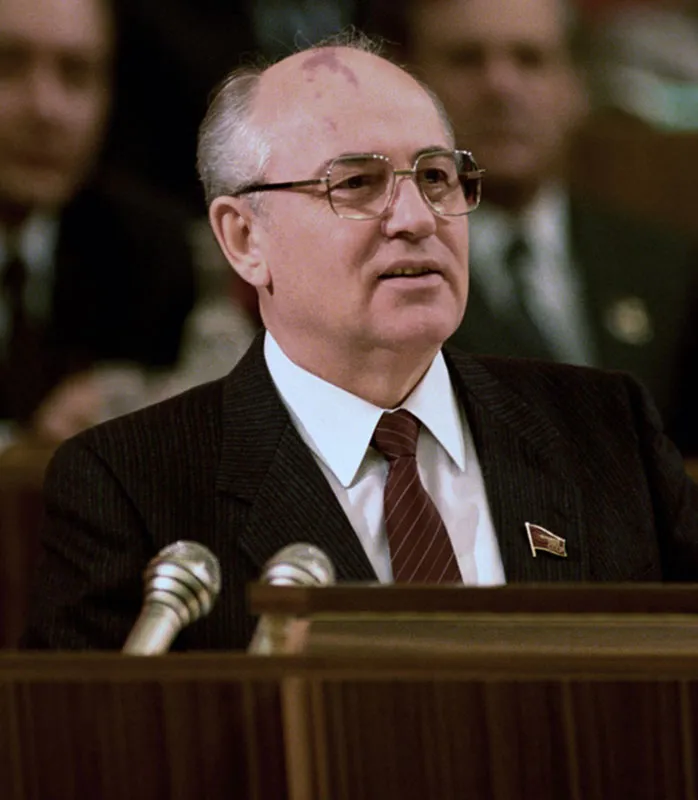
Mikhail Gorbachev
The final leader of the Soviet Union whose reform policies of glasnost and perestroika led to the peaceful end of the Cold War and the dissolution of the USSR.
Nhà lãnh đạo cuối cùng của Liên Xô, người có các chính sách cải cách glasnost và perestroika dẫn đến sự kết thúc hòa bình của Chiến tranh Lạnh và sự tan rã của Liên Xô.
This biography of Mikhail Gorbachev helps you learn English through real historical stories. Explore Mikhail Gorbachev's impact on the world.
born1931
died2022
nationalityRussian/Soviet
known forGlasnost, Perestroika, and ending the Cold War
fieldpolitics and reform
Key Takeaways from this Biography
- He was the final leader of the Soviet Union, coming to power in 1985Ông là nhà lãnh đạo cuối cùng của Liên Xô, lên nắm quyền vào năm 1985
- He introduced 'glasnost' (openness) and 'perestroika' (restructuring) to reform the failing Soviet systemÔng đã đưa ra 'glasnost' (sự cởi mở) và 'perestroika' (sự cải tổ) để cải cách hệ thống Liên Xô đang suy tàn
- He allowed Eastern European nations to transition to democracy peacefully, refusing to use military forceÔng cho phép các quốc gia Đông Âu chuyển đổi sang dân chủ một cách hòa bình, từ chối sử dụng lực lượng quân sự
- He won the 1990 Nobel Peace Prize for his crucial role in ending the Cold WarÔng đã giành giải Nobel Hòa bình năm 1990 cho vai trò then chốt trong việc chấm dứt Chiến tranh Lạnh
Life Timeline
1931
Born in Privolnoye, Soviet UnionSinh ra ở Privolnoye, Liên Xô
1985
Became General Secretary of the Communist PartyTrở thành Tổng Bí thư Đảng Cộng sản
1986
Initiated the policies of glasnost (openness) and perestroika (restructuring)Khởi xướng các chính sách glasnost (công khai) và perestroika (cải tổ)
1989
Refused to intervene militarily as Eastern European nations overthrew communist ruleTừ chối can thiệp quân sự khi các quốc gia Đông Âu lật đổ sự cai trị của cộng sản
1990
Awarded the Nobel Peace PrizeĐược trao giải Nobel Hòa bình
1991
Resigned as President following the dissolution of the Soviet UnionTừ chức Tổng thống sau sự sụp đổ của Liên Xô
2022
Died in Moscow, RussiaQua đời ở Moscow, Nga
Biography Reading: Mikhail Gorbachev
background
Mikhail Gorbachev was born in 1931 into a poor peasant family in southern Russia, enduring the harsh realities of Stalin's rule and the devastation of World War II. After studying law at Moscow State University, he steadily climbed the ranks of the Communist Party. In 1985, representing a new, younger generation of leadership, he was selected as the General Secretary of the Communist Party of the Soviet Union, inheriting a stagnating economy and a deeply entrenched, repressive political system.
Mikhail Gorbachev sinh năm 1931 trong một gia đình nông dân nghèo ở miền nam nước Nga, trải qua những thực tế khắc nghiệt của sự cai trị của Stalin và sự tàn phá của Thế chiến II. Sau khi học luật tại Đại học Quốc gia Moscow, ông thăng tiến đều đặn qua các cấp bậc của Đảng Cộng sản. Năm 1985, đại diện cho một thế hệ lãnh đạo mới, trẻ trung hơn, ông được chọn làm Tổng Bí thư Đảng Cộng sản Liên Xô, kế thừa một nền kinh tế trì trệ và một hệ thống chính trị đàn áp, bắt rễ sâu sắc.
achievement
Recognizing that the Soviet Union could not survive without radical change, Gorbachev introduced two revolutionary policies: "glasnost" (openness), which allowed for unprecedented freedom of speech and press, and "perestroika" (restructuring), aimed at decentralizing the sluggish command economy. On the international stage, he actively pursued arms reduction treaties with US Presidents Ronald Reagan and George H.W. Bush, significantly easing Cold War tensions and withdrawing Soviet troops from Afghanistan.
Nhận ra rằng Liên Xô không thể tồn tại nếu không có sự thay đổi triệt để, Gorbachev đã đưa ra hai chính sách mang tính cách mạng: "glasnost" (sự cởi mở), cho phép quyền tự do ngôn luận và báo chí chưa từng có, và "perestroika" (sự cải tổ), nhằm mục đích phi tập trung hóa nền kinh tế chỉ huy trì trệ. Trên trường quốc tế, ông tích cực theo đuổi các hiệp ước cắt giảm vũ khí với các Tổng thống Mỹ Ronald Reagan và George H.W. Bush, làm giảm đáng kể căng thẳng Chiến tranh Lạnh và rút quân đội Liên Xô khỏi Afghanistan.
impact
When pro-democracy movements swept across Eastern Europe in 1989, culminating in the fall of the Berlin Wall, Gorbachev made the historic decision not to intervene militarily, breaking from decades of Soviet policy. While this earned him the 1990 Nobel Peace Prize and global admiration, his reforms unleashed uncontrollable nationalist forces at home. In December 1991, following a failed hardline coup, the Soviet Union officially dissolved, and Gorbachev peacefully resigned. He remains a highly polarizing figure—revered in the West as a visionary peacemaker, but often blamed by many Russians for the collapse of their empire.
Khi các phong trào ủng hộ dân chủ quét qua Đông Âu vào năm 1989, đỉnh điểm là sự sụp đổ của Bức tường Berlin, Gorbachev đã đưa ra quyết định lịch sử là không can thiệp quân sự, phá vỡ chính sách hàng thập kỷ của Liên Xô. Mặc dù điều này mang lại cho ông Giải Nobel Hòa bình năm 1990 và sự ngưỡng mộ toàn cầu, các cuộc cải cách của ông đã giải phóng các lực lượng dân tộc chủ nghĩa không thể kiểm soát ở trong nước. Vào tháng 12 năm 1991, sau một cuộc đảo chính của phe cứng rắn thất bại, Liên Xô chính thức tan rã và Gorbachev đã từ chức trong hòa bình. Ông vẫn là một nhân vật gây phân cực cao—được phương Tây tôn kính như một người kiến tạo hòa bình có tầm nhìn, nhưng lại thường bị nhiều người Nga đổ lỗi cho sự sụp đổ đế chế của họ.
Essential Vocabulary
stagnatingtrì trệ
ceasing to develop; becoming inactive or dull
ngừng phát triển; trở nên không hoạt động hoặc xỉn màu/chậm chạp
radicaltriệt để / cấp tiến
relating to or affecting the fundamental nature of something; far-reaching or thorough
liên quan đến hoặc ảnh hưởng đến bản chất cơ bản của một cái gì đó; sâu rộng hoặc kỹ lưỡng
decentralizingphi tập trung hóa
the transfer of control of an activity or organization to several local offices or authorities rather than one single one
việc chuyển giao quyền kiểm soát một hoạt động hoặc tổ chức cho một số văn phòng hoặc cơ quan địa phương thay vì chỉ một
intervenecan thiệp
come between so as to prevent or alter a result or course of events
xen vào để ngăn chặn hoặc thay đổi kết quả hoặc tiến trình của các sự kiện
polarizinggây phân cực / chia rẽ
dividing people into two completely opposing groups or opinions
chia rẽ mọi người thành hai nhóm hoặc ý kiến hoàn toàn đối lập
dissolvedtan rã / giải tán
to formally end or dismiss a partnership, corporation, or assembly
chính thức chấm dứt hoặc giải tán một quan hệ đối tác, tập đoàn hoặc hội đồng
Knowledge Check Quiz
FACTUAL1 / 4
What two major reform policies did Mikhail Gorbachev introduce?
Flashcards
KNOWLEDGE
Who was the last leader of the Soviet Union?
Mikhail Gorbachev.
1 / 9