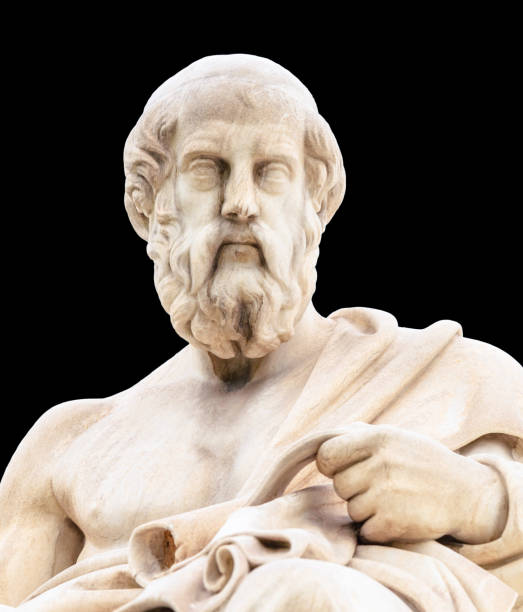
Plato
An ancient Greek philosopher who founded the Academy in Athens and profoundly shaped Western philosophy with his Theory of Forms.
Một triết gia Hy Lạp cổ đại, người sáng lập Học viện tại Athens và định hình sâu sắc triết học phương Tây với Thuyết Hình thức.
This biography of Plato helps you learn English through real historical stories. Explore Plato's impact on the world.
bornc. 428/427 BC
diedc. 348/347 BC
nationalityGreek (Athenian)
known forfounding the Academy, the Theory of Forms, and writing 'The Republic'
fieldphilosophy
Key Takeaways from this Biography
- He founded the Academy in Athens, the first institution of higher learning in the WestÔng đã thành lập Học viện ở Athens, tổ chức giáo dục đại học đầu tiên ở phương Tây
- He developed the Theory of Forms, arguing that non-physical ideas represent the most accurate realityÔng đã phát triển Thuyết Ý niệm, lập luận rằng những ý tưởng phi vật chất đại diện cho thực tại chính xác nhất
- He wrote 'The Republic', exploring justice and the concept of philosopher-kingsÔng đã viết 'Cộng hòa', khám phá công lý và khái niệm về các triết gia-vua
- He preserved and expanded upon the teachings of his mentor, Socrates, through written dialoguesÔng đã bảo tồn và mở rộng những lời dạy của người thầy Socrates thông qua các cuộc đối thoại bằng văn bản
Life Timeline
c. 428 BC
Born in Athens to an aristocratic familySinh ra ở Athens trong một gia đình quý tộc
c. 407 BC
Became a devoted student of SocratesTrở thành một học trò tận tụy của Socrates
399 BC
Witnessed the trial and execution of his mentor, SocratesChứng kiến phiên tòa và vụ hành quyết người thầy của mình, Socrates
c. 387 BC
Founded the Academy in Athens, the first institution of higher learning in the Western worldThành lập Học viện (Academy) ở Athens, cơ sở giáo dục đại học đầu tiên ở phương Tây
c. 375 BC
Wrote his most famous dialogue, 'The Republic'Viết tác phẩm đối thoại nổi tiếng nhất của ông, 'Cộng hòa' (The Republic)
c. 348 BC
Died in AthensQua đời ở Athens
Biography Reading: Plato
background
Plato was born around 428 BC in Athens, Greece, into a wealthy and politically active aristocratic family. As a young man, he was highly educated in grammar, music, and gymnastics, initially aspiring to a career in politics or poetry. However, his life took a dramatic turn when he met Socrates. Plato became his most devoted student, deeply inspired by Socrates's relentless pursuit of truth and virtue. The tragic execution of his beloved mentor in 399 BC deeply disillusioned Plato with Athenian democracy, prompting him to travel extensively across the Mediterranean to study mathematics, geometry, and religion.
Plato sinh khoảng năm 428 TCN tại Athens, Hy Lạp, trong một gia đình quý tộc giàu có và tích cực tham gia chính trị. Khi còn trẻ, ông được giáo dục bài bản về ngữ pháp, âm nhạc và thể dục, ban đầu khao khát một sự nghiệp trong lĩnh vực chính trị hoặc thơ ca. Tuy nhiên, cuộc đời ông đã bước sang một ngã rẽ ngoạn mục khi ông gặp Socrates. Plato trở thành học trò tận tụy nhất của ông, được truyền cảm hứng sâu sắc bởi sự theo đuổi không ngừng nghỉ của Socrates đối với chân lý và đức hạnh. Vụ hành quyết bi thảm của người thầy kính yêu vào năm 399 TCN đã khiến Plato vô cùng thất vọng với nền dân chủ Athens, thúc đẩy ông đi du hành rộng rãi khắp Địa Trung Hải để nghiên cứu toán học, hình học và tôn giáo.
achievement
Upon returning to Athens around 387 BC, Plato founded the Academy, which is widely considered the first institution of higher learning in the Western world. It was here that he taught his most famous student, Aristotle. Plato is best known for his "Theory of Forms," which argues that the physical world we see is merely a shadow or imperfect copy of a higher, spiritual realm of perfect, eternal Ideas (or Forms). He famously illustrated this concept using the "Allegory of the Cave," describing people chained in a dark cave who mistake shadows on a wall for absolute reality, until one escapes into the sunlight of true knowledge.
Khi trở lại Athens vào khoảng năm 387 TCN, Plato đã thành lập Học viện (Academy), nơi được coi rộng rãi là tổ chức giáo dục đại học đầu tiên trong thế giới phương Tây. Chính tại đây, ông đã dạy học trò nổi tiếng nhất của mình là Aristotle. Plato nổi tiếng nhất với "Thuyết Ý niệm" (Theory of Forms), lập luận rằng thế giới vật chất mà chúng ta nhìn thấy chỉ là một cái bóng hoặc bản sao không hoàn hảo của một cõi tâm linh cao hơn chứa đựng những Ý niệm (hoặc Hình thức) hoàn hảo, vĩnh cửu. Ông đã minh họa khái niệm này một cách nổi tiếng bằng "Ngụ ngôn cái hang", mô tả những người bị xích trong một hang tối lầm tưởng những cái bóng trên tường là thực tại tuyệt đối, cho đến khi một người trốn thoát ra ngoài ánh sáng mặt trời của tri thức đích thực.
impact
Plato's philosophical ideas were brilliantly captured in his written dialogues, where he often used Socrates as the main character to explore complex concepts like justice, beauty, and equality. In his masterpiece, "The Republic," he envisioned an ideal utopian society ruled not by wealthy politicians or kings, but by wise "philosopher-kings" who possessed true knowledge of the good. Until his death around 348 BC, Plato continuously sought to elevate human understanding beyond the material world. His profound writings laid the absolute foundations for Western philosophy, science, and political theory for millennia to come.
Những ý tưởng triết học của Plato được ghi lại một cách xuất sắc trong các cuộc đối thoại bằng văn bản của ông, nơi ông thường sử dụng Socrates làm nhân vật chính để khám phá các khái niệm phức tạp như công lý, cái đẹp và sự bình đẳng. Trong kiệt tác của mình, "Cộng hòa" (The Republic), ông đã hình dung ra một xã hội không tưởng lý tưởng không bị cai trị bởi các chính trị gia giàu có hay các vị vua, mà bởi những "triết gia-vua" khôn ngoan, những người sở hữu kiến thức thực sự về cái thiện. Cho đến khi qua đời vào khoảng năm 348 TCN, Plato không ngừng tìm cách nâng cao sự hiểu biết của con người vượt ra ngoài thế giới vật chất. Những bài viết sâu sắc của ông đã đặt nền móng tuyệt đối cho triết học, khoa học và lý thuyết chính trị phương Tây trong hàng thiên niên kỷ tới.
Essential Vocabulary
aristocraticthuộc tầng lớp quý tộc
belonging to the highest social class, often holding hereditary titles or offices
thuộc tầng lớp xã hội cao nhất, thường nắm giữ các tước hiệu hoặc chức vụ cha truyền con nối
disillusionedvỡ mộng / thất vọng
disappointed in someone or something that one discovers to be less good than one had believed
thất vọng về một người hoặc một điều gì đó mà người ta phát hiện ra là không tốt như mình từng tin tưởng
allegorychuyện ngụ ngôn
a story, poem, or picture that can be interpreted to reveal a hidden meaning, typically a moral or political one
một câu chuyện, bài thơ hoặc bức tranh có thể được diễn giải để tiết lộ một ý nghĩa ẩn giấu, điển hình là về đạo đức hoặc chính trị
utopiankhông tưởng (lý tưởng)
modeled on or aiming for a state in which everything is perfect; idealistic
được mô hình hóa hoặc hướng tới một trạng thái trong đó mọi thứ đều hoàn hảo; lý tưởng hóa
realmcõi / vương quốc
a field or domain of activity or interest
một lĩnh vực hoặc phạm vi hoạt động hoặc sự quan tâm
dialoguecuộc đối thoại
a conversation between two or more people as a feature of a book, play, or film
một cuộc trò chuyện giữa hai hoặc nhiều người như một đặc điểm của một cuốn sách, vở kịch hoặc bộ phim
Knowledge Check Quiz
FACTUAL1 / 4
What was the name of the school Plato founded in Athens?
Flashcards
KNOWLEDGE
Who was Plato?
An ancient Greek philosopher who founded the Academy.
1 / 9